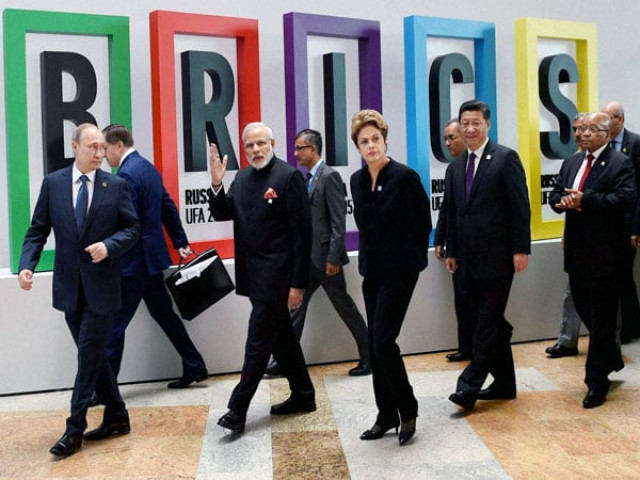
The 18th BRICS Summit to be held in New Delhi on 12-13 September is a challenging time for the grouping. BRICS used to be mainly about economic cooperation but has now expanded to also include political coordination and global governance. Its expansion has increased its global weight while deepening geopolitical divisions. The Iran-Israel-US clash has brought the cleavages to the fore, challenging India’s capacity to forge consensus among the growing diversity of its members.
The summit is meant to give New Delhi the chance to assert itself as a key Global South voice and prove its capacity to run a diverse coalition. However, today, BRICS is not made up of countries with aligned strategic interests. The grouping is broadened by Egypt, Ethiopia, Indonesia, Iran and the UAE, making the consensus more challenging. These challenges were highlighted during the failure of the BRICS Foreign Ministers’ Meeting in May 2026 to issue a joint statement, especially on the West Asia issue.
The West Asia conflict is therefore the immediate test of India’s leadership. While Iran and the UAE are both members of BRICS, they have differing interests and security concerns in the region. India must therefore seek language that acknowledges the crisis without forcing members to endorse positions contrary to their national interests.
BRICS is an attempt to voice a stronger Global South voice, but its members do not have a shared view of international politics. There are those who would prefer a greater pushback against Western dominance and others who would rather be more flexible in their relationship and interaction with Western and non-Western powers. India is primarily a part of this second group. Russia and China prefer more robust methods of mitigating reliance on Western-based systems, and India has been wary of the idea of making BRICS an anti-Western bloc. New Delhi instead follows strategic autonomy, maintaining ties with the United States and other Western partners while engaging Russia, China and the wider Global South. This flexibility, however, makes it difficult for India to steer the course of BRICS in one geopolitical direction.
China presents another fundamental challenge to India’s leadership ambitions. India’s growing engagement with the United States exists alongside its BRICS and SCO memberships, reflecting its balancing strategy. Beijing has greater economic weight across the developing world and favours a more ambitious role for BRICS. India can shape the direction of the grouping but is not easily going to dominate the group.
As BRICS expands, there is an increased diplomatic clout of developing countries, but strategic cohesion does not come automatically as a result of the expansion. Its future significance will not be determined by looking at it as an alternative ideological bloc; rather, the focus will be on where they might be able to cooperate in spite of their geopolitical differences.
Economic cooperation is a feasible path forward. BRICS can cooperate despite the differences in geopolitics in trade facilitation, local-currency settlements, development finance, energy and food security, digital connectivity and climate resilience. Other financial instruments like the New Development Bank might also gain more relevance if members are not so much interested in them being an attack on the current international system but rather in infrastructure and development.
For Pakistan, BRICS is not just about India’s aspirations and ambitions. Islamabad should instead focus on the broader rise of the Global South and the growing role of multilateral platforms in global decision-making. Pakistan’s relationships across the Muslim world offer opportunities to strengthen its diplomatic profile and build wider partnerships.
Pakistan needs issue-based diplomacy to engage in Global South diplomacy. Islamabad can pave the way for partnerships with the BRICS countries on several issues such as economic connectivity, energy and food security, digital development, climate resilience, and reform of international financial institutions. This involvement should also be directed to domestic economic priorities, with tangible proposals in the field of infrastructure, renewable energies, agriculture, adaptation to climate change and digital services. The visibility of the diplomats has to go hand-in-hand with economic readiness and the ability to take up agreements.
India therefore faces a paradox: the more BRICS expands, the greater its global significance becomes, but the harder it becomes for any single member to control its political direction. India can influence the grouping, but its ability to shape consensus remains constrained by competing interests among members. The difficulties at the May 2026 Foreign Ministers’ Meeting underscored these limitations.
The results of the summit in September will help decide the fate of BRICS. India’s success in reaching consensus on a substantive declaration will boost its clout in the diplomatic arena. If they arise and result only in a few generic words or don’t lead to any substantive common text, then it will be a clear sign that the expansion of BRICS is outstripping their ability to coordinate politically. Either way, it is not likely that the bloc will come together as a cohesive geopolitical alliance in the short term.
The takeaway for Pakistan is to diversify its diplomatic engagement to engage with a new range of partners, build stronger relations with the Global South and actively seek effective and real cooperation and partnership at various multilateral forums. In the end, Islamabad needs to assess such engagement on its ability to translate it into real economic and strategic benefits. India may be hosting BRICS, but the grouping’s internal divisions show that influence in a multipolar world cannot be measured simply by who hosts a summit. The real measure of diplomatic strength lies in the ability to build sustainable partnerships, manage differences and turn multilateral platforms into tangible national benefits.
This article was published by The Diplomatic Insight in another form at https://thediplomaticinsight.com/brics-india-can-new-delhi-hold-bloc-together/


Shahwana Binte Sohail is is Research Assistant at the Centre for International Strategic Studies Islamabad.