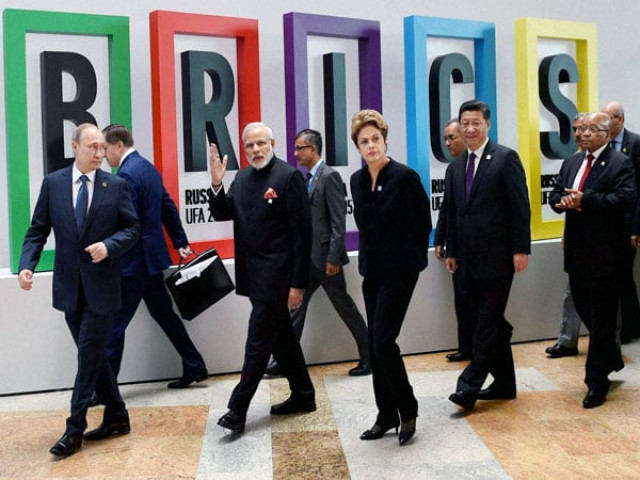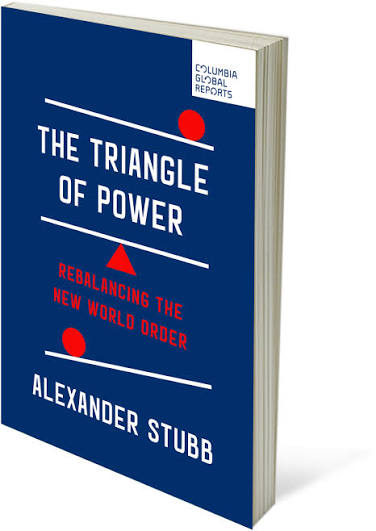
The Triangle of Power: Rebalancing the New World Order is one of the earliest attempts by a sitting head of state to interpret the emerging international order after the Russia-Ukraine war. Alexander Stubb, president of the Republic of Finland and a former foreign minister, brings in a perspective of a practitioner on today’s geopolitics as well as a conceptual lens on the changing world of global power. On 24 February 2022, the invasion of Ukraine by Russia marked the ‘de facto conclusion’ of the post-Cold War liberal order, he says. It is replaced by what he calls the ‘Triangle of Power’: Global West, Global East, and Global South, whose interaction will define the future international system. While the triangular structure serves as a reliable and easy-to-understand mechanism for structuring the current geopolitical landscape, it also raises key questions. Like, today’s international system is more coalition and issue-based, strategic ‘hedging,’ and overlapping partnerships than it is geopolitical blocs. The Middle powers like Türkiye, Saudi Arabia, Indonesia, Brazil and the members of the ASEAN states often do not choose to align with one bloc alone. Thus, the framework offers analytical clarity, while also necessarily simplifying an ever-more fluid and overlapping geopolitical picture.
The book is divided into three parts and nine chapters, framed by an introduction and a concluding chapter. The first part maps the changing course from a post-Cold War order to the current disorder. The author states that Western policies, ranging from the Iraq war to the 2008 financial crisis, eroded confidence in the liberal order, and the Ukrainian situation saw the further erosion of the order is due to Russia’s invasion of Ukraine. He also looks at the erosion of multilateral institutions and questions whether the international system, led by the United Nations (UN), is growing weaker due to an increase of regionalization, institutional proliferation, and lack of trust. The pillars of the liberal order were already being undermined by many of the forces reshaping world politics before the 2008 global financial crisis, Brexit, the Trump presidency and the COVID-19 pandemic. The Ukraine war is not an end to something, but rather a catalyst for something that has been evolving.
The second part reviews the Three Corners of the Triangle of Power. The Global West is depicted as politically polarized, yet having significant economic, technological, and institutional advantages. The Global East is characterized by a focus on two leading states i.e., China and Russia, with China being the main force of the bloc due to its strong economy and technological potential, and Russia being evaluated on structural decay and military strength. The Global South, on the other hand, is defined as the mass of humanity, whose increasing economic and political strength could and will influence the new international order.
The last part of the book analyses competition, conflict and cooperation as the main dynamics of the future order. The author covers hybrid warfare, cyber warfare, disinformation, and sabotage of infrastructure as the symbols of contemporary competition and also notes Western flaws in its humanitarian response. It ends with recommendations for more robust multilateral action on climate change, trade and security, as well as for more ambitious reforms of the United Nations Security Council, with more permanent members and less abuse of the veto.
A major advantage of the book is the author’s own first-hand experience. The author’s justification is based on his communications with President Vladimir Putin, Xi Jinping and Trump, his engagement in European diplomacy, the 2008 ceasefire agreement in Georgia and eurozone negotiations. These experiences give the book a point of view that tends to be missing from traditional academic courses. There was also a willingness to recognize the flaws of the liberal international order, a willingness which is equally striking. He does not simply take the word of the Western media, but allows himself to voice his doubts about the Western sense of complacency, misjudgements, and double standard, making the analysis more credible.
The central idea of the book i.e., ‘values-based realism’ is equally thought-provoking but remains conceptually underdeveloped. The concept of strategic pragmatism and democratic values doesn’t always play together. Also, the difference between the two and the revised liberal internationalism is not always apparent. Thus, it looks more like a reformulation of liberal internationalism than a new theory of realism and raises significant questions about its operation in the event of conflicts between values and strategic interests.
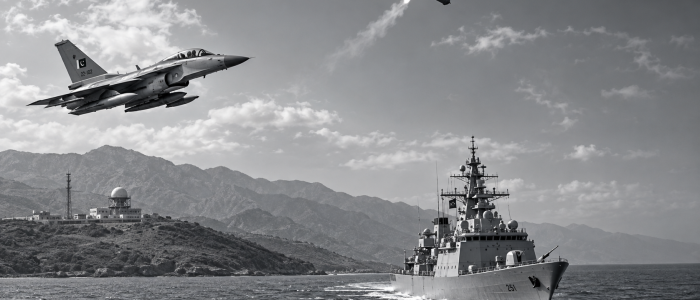
However, the book is not without other limitations. The West-East-South framework gives it a coherent structure, but is brought up so often that parts of the discussion become repetitive, especially the repeated suggestions for United Nations reforms. More significantly, there does not seem to be an even treatment of the Global East. While Russia is constantly analysed with a critical perspective, focusing on Russia’s corruption, inefficiency and stagnation, China is more often discussed in a descriptive and analytical way, despite its central position in the Global East. Likewise, the discussion of the Global South is still basically India-centric. Other important states are comparatively underrepresented while India is given the active role as the primary representative of the Global South. For instance, Pakistan is in a pivotal position between South Asia, the Indian Ocean, the Chinese Belt and Road Initiative and regional nuclear stability. A greater discussion of such perspectives would have reinforced the book’s title as a more comprehensive representation of the Global South. While the author is critical of Western policies on topics like the Iraq war, the global financial crisis, and the lack of climate commitments, there is less consideration given to the selective application of liberal norms in other parts of the world. More attention to cases, such as the use of a liberal interpretation of the application of international norms in Indian developments in Jammu and Kashmir following the 2019 constitutional changes or the Indian suspension of the Indus Waters Treaty framework. This would have strengthened the overall message of the book to remain consistent in the enforcement of international norms. Taken together, these limitations call for a more measured conclusion than an unqualified endorsement. The Triangle of Power is an informative, insightful and timely account of the forces changing the international order and is an invaluable lens on the state of the geopolitical transition as understood by many in the West. Meanwhile, the book’s triangular structure, the formulation of ‘values-based realism’ and its portrayal of the Global South require closer examination than that offered by the book itself. These restrictions are not an impediment to its contribution, but rather increases the value of the book as a discussion point on the contours of the new world order.
This book review was published by the Islamabad Policy Institute in another form at https://ipi.org.pk/the-triangle-of-power-rebalancing-the-new-world-order/


Amna Saqib is Research Officer & Assistant Editor at the Center for International Strategic Studies (CISS) Islamabad.