Introduction
In an era marked by a changing geopolitical landscape, alliances, energy insecurity, as well as the persistent requirement for a global energy transition to cleaner forms of energy, nuclear energy is gaining great importance in national development strategies of various countries around the world. Pakistan—a country with decades of experience, a clean track record in nuclear operation, and a robust safety and security mechanism—has achieved significant milestones, including power generation, agriculture, nuclear diagnostics, and medicine. It has commenced its program on peaceful uses of nuclear technologies by getting inspiration from the “Atoms for Peace” project by the United States in 1954. In addition, with rapid population growth, Pakistan is facing an energy crisis, creating an urgent need for sustainable power generation. Today, nuclear energy is no longer an option—it is a strategic imperative. In this context, Pakistan is working indigenously, collaborating with countries for the development of peaceful uses of nuclear technologies. Currently, China has become a key country cooperating with Pakistan in this sector. However, expanding collaboration with other nations is becoming increasingly promising, especially with Russia, a key player in nuclear technologies. Bilateral cooperation could further advance Pakistan’s capabilities in nuclear energy and technologies. This feature article explores the potential for Pakistan-Russia cooperation in peaceful uses of nuclear technologies and identifies major challenges that may shape this evolving partnership.
Background of Pakistan-Russia Relations
Once characterized by Cold War enmities and competing alliances, Pakistan-Russia bilateral relations have gradually evolved in the post-Cold War era. This transformation has been driven by converging global and regional economic interests and an evolving global strategic environment. The two countries maintain positive diplomatic and economic relations in various sectors, but cooperation in peaceful use of nuclear technologies remains limited and thus requires further development.
In 1991, the disintegration of Soviet Union brought about new opportunities for bilateral Russia-Pakistan relations as the bipolar global order came to an end. Both countries commenced cautiously, exploring their diplomatic and economic relations, but the development remained slow. The post-2000 era brought about a transformation in the diplomatic approaches of Russia and Pakistan, which began focusing on expanding practical cooperation. Pakistan and Russia strengthened their cooperation through counterterrorism efforts, energy collaboration, and began to participate in the various multilateral forums and organizations, such as the Shanghai Cooperation Organization (SCO). However, cooperation on peaceful nuclear technology remains very limited, which differs from Russia’s extensive collaboration with other countries, such as Bangladesh, India, China, Turkey, Egypt, and Iran.
Nuclear Power Generation Research and Development
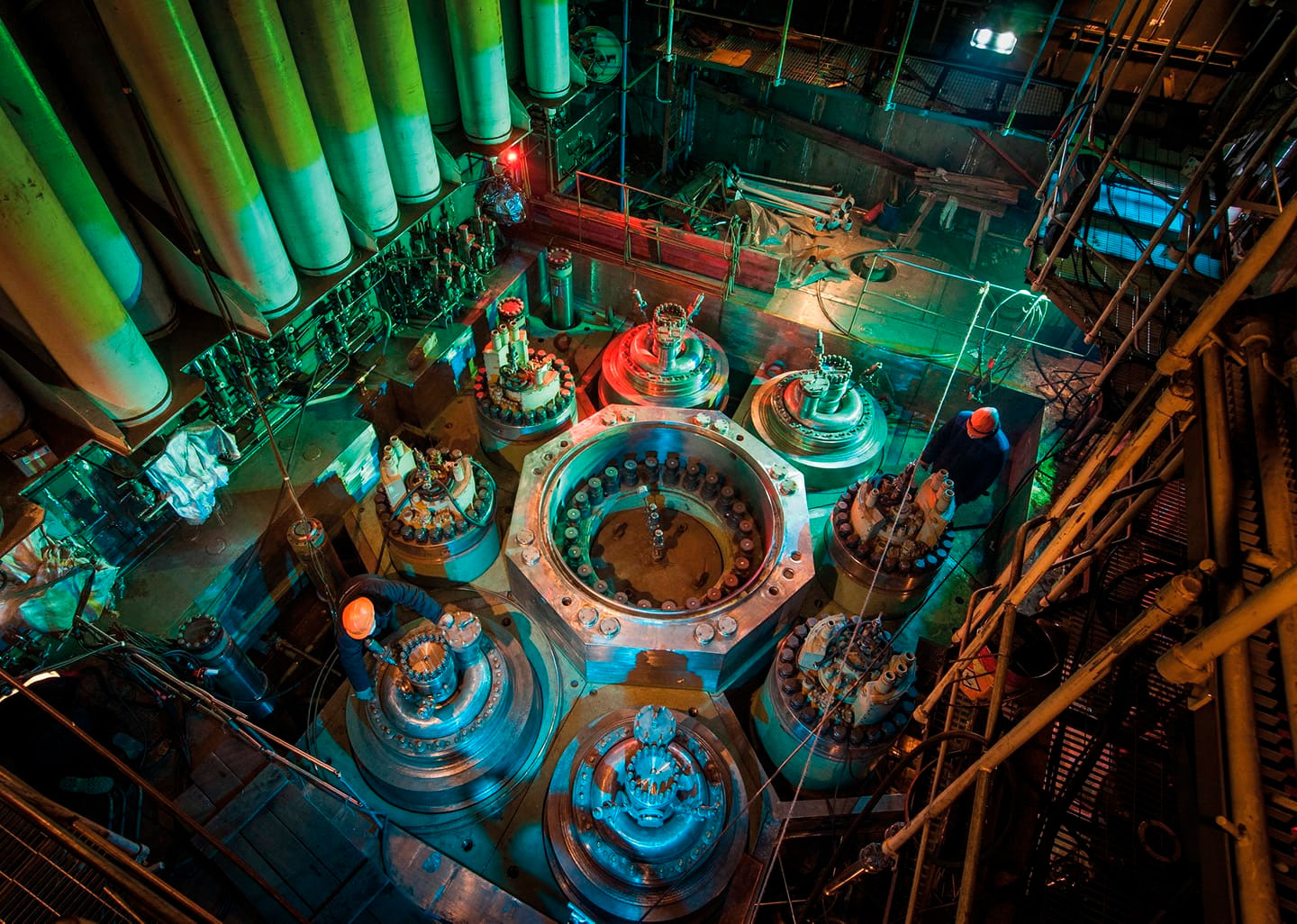
The foremost area in which the two countries have been expanding bilateral cooperation is nuclear power generation. Pakistan is currently facing a severe energy crisis, and its unstable energy mix relies heavily on imported fossil fuels, which also contributes to various environmental challenges. To address these issues, Pakistan is working toward the establishment of large nuclear power plants (NPPs) and has already initiated construction of the Chashma-5 (C-5) NPP. Here, Rosatom, the world’s leading company in the construction and operation of large-scale NPPs and Small Modular Reactors (SMRs), can play an important role. The Build-Own-Operate (BOO) model, with its extended fuel supply agreements, serve as a viable solution that can meet Pakistan’s power requirements while minimizing operational and financial challenges.
Cooperation between the Pakistan Atomic Energy Commission (PAEC) and Rosatom could also be possible in various areas, including research and development, training for engineers, scientists, and other relevant professionals, and the provision and development of SMR technology in Pakistan. Currently, Pakistan does not have operational SMRs; however, the Center for Studies on Emerging Reactor Technologies (CERT) at the Pakistan Institute of Engineering and Applied Sciences (PIEAS) is actively engaged in research on advanced reactor designs, particularly SMRs. These developments were acknowledged by Rafael Grossi, Director General of the IAEA, during his visit to Pakistan in February 2023. Grossi noted that Pakistan possesses the technical and engineering capacity to develop new NPPs, including SMRs. Hence, collaboration with Russia in this domain would further enhance Pakistan’s capabilities in peaceful uses of nuclear technologies.
Moreover, during the World Atomic Week Forum in Moscow, Chairman of PAEC Dr. Raja Ali Raza Anwar stated that Pakistan is preparing to collaborate with Russia’s Rosatom in various advanced areas such as additive manufacturing, data processing, and quantum technologies. He further highlighted that talks on expanding nuclear power plants and ensuring the peaceful use of nuclear technology have become a global priority. In addition, Dr. Anwar pointed out that many countries are increasingly concentrating on how nuclear technologies can advance the performance of power plants and deliver long-term benefits for the coming generation. Russian Foreign Minister Sergei Larov, during a visit to Pakistan in April 2021, also stated that Rosatom and PAEC are “exploring cooperation in using nuclear energy for medicine and industry purposes.”
Nuclear Medicine
Nuclear medicine and radiopharmaceuticals provide an appropriate development path as it functions without requiring power generation systems. In this sector, PAEC is already contributing by offering diagnosis and cancer treatment in its nineteen Atomic Energy Cancer Hospitals (AECHs) throughout the country. However, the health sector in Pakistan could be further developed in collaboration with Russia by technology transfers, research training programs, as well as joint ventures, as it has already advanced nuclear oncology expertise, radioisotope manufacturing capabilities, and medical reactor development experience. The prospects of bilateral cooperation with Russian research institutions and state owned enterprises include Rosatom’s TVEL Fuel Company, which manages isotope production logistics, and Pakistan’s Joint Institute for Nuclear Research (JINR), located in Dubna. Both are key institutions leading the way in medical isotope research.
Agricultural Development
Another potential area of cooperation between two countries is in agricultural development through nuclear technologies. PAEC has agriculture and biotechnology institutes, which include the National Institute for Food and Agriculture (NIFA), the National Institute for Biotechnology and Genetics Engineering (NIBGE), the Nuclear Institute for Agriculture and Biology (NIAB), and the Nuclear Institute of Agriculture (NIA), previously known as the Atomic Energy Agricultural Research Center (AEARC). Bilateral cooperation in this sector through joint research and development projects, academic and expert exchange programs, shared access to gamma irradiation facilities, and the transfer of seeds already adopted to arid and semi-arid conditions all could significantly improve Pakistan’s food security and strengthen Russia-Pakistan relations.
Russia’s organizational experience and background in this sector is both comprehensive and well-structured. A key institute is the Russian Institute of Radiology and Agroecology (RIRAE), which has a long history of conducting research into the behavior of radionuclides in agricultural ecosystems and the application of radiation technologies to improve soil productivity and food safety. Other Russian institutions which have dedicated agronuclear research programs include the Federal Medical-Biological Agency (FMBA), the Russian Academy of Sciences (RAS), and the All-Russian Research Institute of Agricultural Radiology and Agro-ecology. The later specially conducts research focused on isotopic tracer methods for observing nutrient cycles, groundwater contamination, and fertilizer efficacy tools appropriate for water-stressed agricultural regions in Pakistan, such as Sindh and Southern Punjab. In addition, Russia has the expertise in dealing with international organizations such as the Food and Agriculture Organization (FAO) and the IAEA Joint Division on Nuclear Techniques. These international organizations offer a multifaceted network through which both Pakistan and Russia could collaborate in conducting research, share experimental results—including crop varieties developed using mutation breeding—and coordinate food irradiation standards.
Challenges and Prospects
Currently, Pakistan is facing various global challenges, the greatest being the discriminatory role of the global nuclear order. Particularly, Pakistan’s exclusion from the Nuclear Suppliers Group (NSG) hinders the prospects of cooperation in peaceful uses of nuclear technologies. The NSG maintains restrictions on civil nuclear trade, and given Pakistan’s non-member status, it is prevented from obtaining much-needed access. India, on the other hand, received a unique, country-specific exemption from the India–United States Civil Nuclear Agreement and the Nuclear Suppliers Group (NSG) in 2008 that allows it to trade civilian nuclear technology, despite not signing the Nuclear Non-Proliferation Treaty (NPT). Such exceptions, in turn, are often considered by other states, including Pakistan, as an example of discriminatory practices in the non-proliferation and arms control regime.
Moreover, Pakistan-Russia cooperation in peaceful uses of nuclear technologies is further constrained by various institutional, legal and geopolitical barriers. Russia seeks to have a balanced relationship with its emerging ties with Pakistan, and its traditional strategic partnership with India. Apart from challenges linked to balancing these relationships, there are also considerable differences in technological standards, as well as regulatory requirements and financing terms between Rosatom and the PAEC. These issues are further complicated by the new sanctions imposed on Russia following the start of the Ukraine conflict in 2022. Both countries need to work towards developing their institutional capacities so that they can sustain the increasing level of cooperation on peaceful uses of nuclear energy.
Conclusion: Pakistan’s cooperation with Russia in peaceful nuclear technology stands at the crossroads of both opportunities and challenges. Having significant potential and expertise at the bilateral level, the technical and developmental rationale for boosting cooperation in this area is strong. However, geopolitical obstacles seemingly restrict the ability to achieve the objectives laid out for further collaboration. Over the past five decades, Pakistan, even after gaining significant experience in the peaceful uses of nuclear technologies—and with a remarkable record of safe operations and compliance with the IAEA safety standards—still it faces discriminatory approaches from international regulatory bodies. The evolution of global nuclear governance needs to become more equitable and practical to accomplish an actual transformation in international cooperation. The international community should address the current nuclear trade mechanism, which consists of multiple contradictions. The political constraints which restrict responsible nations from obtaining peaceful nuclear technology prevent their progress and their ability to meet sustainable development goals.
This article was published by the Russian International Affairs Council (RIAC) in another form at https://russiancouncil.ru/en/analytics-and-comments/columns/eurasian-policy/pakistan-russia-cooperation-in-peaceful-uses-of-nuclear-technologies-challenges-and-prospects/


Dr Muhammadi is Associate Director Research at the Center for International Strategic Studies (CISS), Islamabad and is currently placed at CISS-KIU Research Center, Karakorum International University (KIU), Gilgit-Baltistan, Gilgit.