From the 1957 Sputnik-1 satellite to more contemporary explorations such as NASA’s Artemis III program, space has become the high ground for state competition due to its multifaceted military and civilian applications. The behavior of states within the space domain mirrors the earthly quest for dominance to plant flags on the uncharted territories. Orbits have become the new playground for spacefaring nations. Now, states are developing a strategic culture beyond the skies and harnessing scientific curiosity to enhance sovereignty, power, and status.
In South Asia, India’s expanding space program—featuring anti-satellite weapons (ASAT) to spy and surveillance satellites—is not motivated by technological ambitions but is instead a function of its deep strategic culture. Indian scholar Rajesh Basrur’s concept of deep Indian strategic culture is an apt lens to study India’s space politics. India’s space odyssey reflects its quest for autonomy and prestige, the two essential components of its deep strategic culture.
Basrur identifies two levels of strategic culture: ‘mutable strategic culture’ that can shift over time and ‘deep strategic culture’ that is a set of core strategic preferences derived from historical experiences. According to Basrur’s statement in his book chapter on Indian Strategic Culture, defining a deep strategic culture is “tricky, perhaps tautological since it is a recognition that is post facto (a long-term attribute is deep until it is not!).” Still, he defines deep strategic culture as “patterns that are sustained unchanged over a long period of time (in the present context, since independence), irrespective of changing circumstance.”He further underscores the two most enduring pillars of Indian strategic culture as a persistent preference for strategic autonomy and a long-standing quest for status on the global stage.
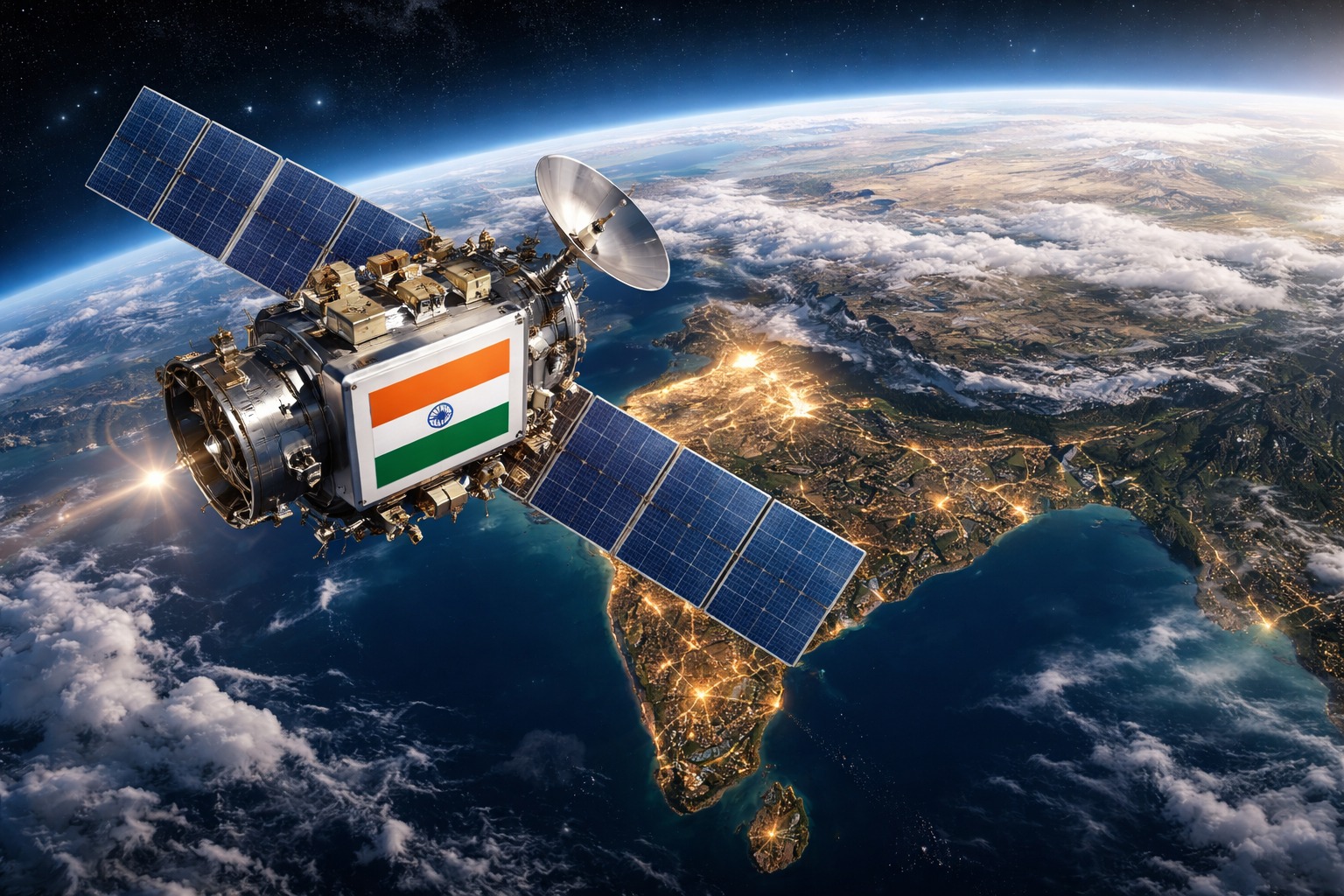
India’s space politics is thus a reflection of its deep-rooted desire to achieve strategic autonomy. India has heavily invested in dual-use technologies, such as navigation satellites (NavlC) and communication satellites (GSAT). India leverages these dual-use technologies as a strategic enabler that allows real-time monitoring and surveillance of the South Asian region and beyond. Moreover, the indigenous development of launch vehicles like the PSLV (Polar Satellite Launch Vehicle) and GSLV (Geosynchronous Satellite Launch Vehicle) is adaptable for military purposes.
The Mission Shakti ASAT Test is evidence of using an indigenous launch vehicle for the delivery of kinetic anti-satellite weapons. It underscores the operational autonomy in space without reliance on external partners or even against them. The pattern of international space cooperation of India is also driven by its deep strategic culture. India engages with both the US and Russia as per its strategic needs. This multi-alignment strategy aims to get access to modern technology, expertise, and partnerships without committing to any one side.
Another deeply interwoven element of Indian strategic culture in its space politics is the pursuit of status. India leverages space as a key domain to achieve recognition as a technologically advanced and influential major power. India demonstrates its status through high-profile space missions, such as Chandrayaan, Mangalyaan, and the upcoming Gaganyaan mission. These missions garner international attention and enhance India’s prestige, signaling to the international community that the country has ambitious space aims.
Furthermore, to enhance prestige and status, India participates in international space forums of exploration and governance like the Artemis Accords, the TRUST initiative, and the Initiative on Critical and Emerging Technologies (iCET). India harnesses these platforms to advance its national interests by gaining greater visibility, access to dual-use technologies, and opportunities for space exploration. India also leverages these forums for high-accuracy real-time data that allows it to do regional surveillance and monitoring.
Indian space politics is not only about capability but also about demonstrating it in ways that enhance its international standing. All this is not occurring in isolation but in a region with a fragile balance of power maintained by nuclear deterrence. This translation of Indian strategic culture into astropolitics has regional and global implications. At the regional level, India’s increasingly offensive space uses, such as surveillance, missile guidance, and precision strikes, are creating a security dilemma for its neighbors. This disrupts the regional balance of power and will motivate Pakistan to enter an arms race or to equip itself with non-military means to compete with India.
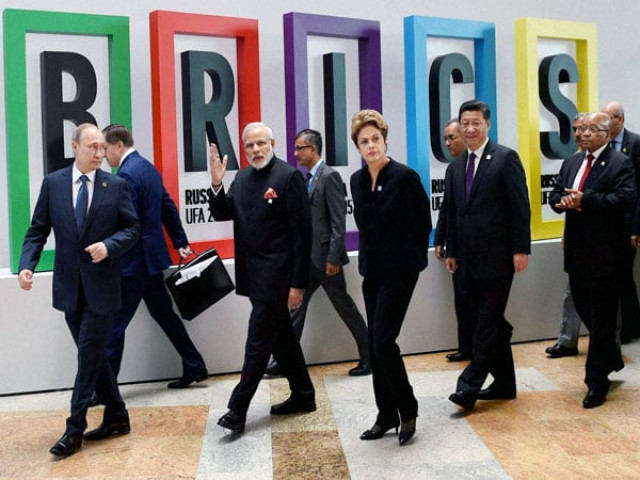
At the international level, India is actively involved in cooperation with both the U.S. and Russia; however, India’s multi-alignment strategy is not working as per its expectations. There are structural constraints at the heart of the implementation of Indian astropolitics. India is dependent upon the U.S. for advanced space technologies, intelligence, and commercial space opportunities. It erodes the very basic tenet of Indian astropolitics, strategic autonomy. Moreover, India and Russia have a joint historical space and defence ecosystem, which has become politically sensitive amidst international sanctions on Russia. The dual-track or multi-alignment strategy of India increases strategic ambiguity. In a nutshell, Strategic autonomy sounds sophisticated, but it is practically quite unlikely, as alliances and power blocs are the pivot of international relations. The contemporary strategic rift between the United States and India is evidence of the backfiring of multi-alignment as the U.S. criticizes India on its multi-alignment strategy and close ties with Russia. If this strategic split expands, it reduces India’s technological options, putting serious constraints on its space program that is dependent upon both the US and Russia. Indian strategic ambiguity exposes it to structural pressures and embed regional security dilemma by reinforcing perceptions of India as a destabilizing actor in an already fragile strategic environment.
This article was published in another form at https://globalsecurityreview.com/indias-deep-strategic-culture-beyond-the-skies/


Areesha Manzoor is Research Assistant at the Center for International Strategic Studies (CISS), Islamabad.