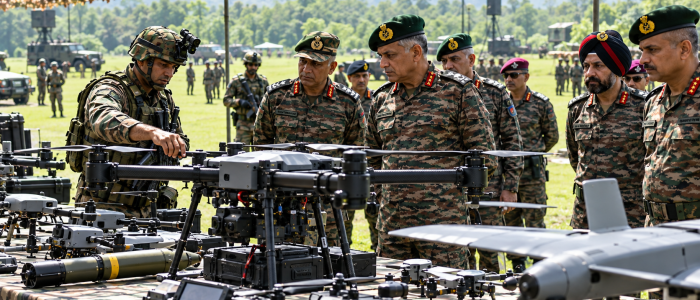
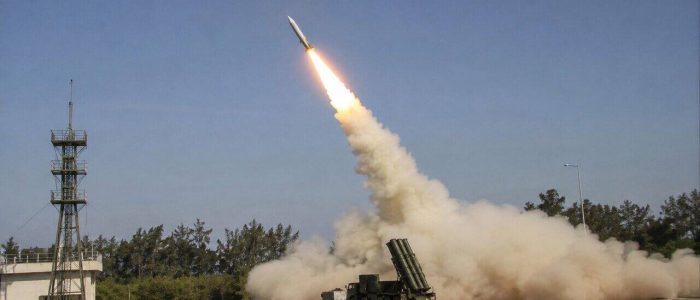
India’s recent successful test of the indigenous SURYASTRA Universal Rocket Launcher System marks another step in its ongoing military modernization programme. Developed by NIBE Limited (an Indian defence manufacturing company), the system reportedly demonstrated the capability to launch precision-guided rockets with ranges of 150 and 300 kilometres under the Indian Army’s emergency procurement framework. Indian officials have presented the development as part of technological self-reliance and defence preparedness. However, its broader implications for South Asian security cannot be overlooked. In an already fragile regional environment, the expansion of long-range precision strike capabilities risks an arms competition and increasing escalation pressures.
South Asia remains one of the world’s most sensitive nuclear regions. Historical tensions, unresolved disputes, and recurring military crises continue to shape the security calculations of both Pakistan and India. In such an environment, military modernization by one state inevitably affects the threat perceptions of the other. India’s growing investment in missile systems, rocket artillery, integrated air defence, and emerging technologies reflects a broader effort to enhance its operational advantage in the region.
The significance of the SURYASTRA system lies in the increasing role of precision-guided conventional weapons in modern warfare. Unlike traditional artillery systems, long-range guided rockets can strike military and strategic targets with greater speed and accuracy. Such capabilities reduce response time during crises and place greater pressure on political and military decision-makers. They may also encourage assumptions that limited conventional operations can remain below the escalation threshold.
These concerns are not merely theoretical. Recent conflicts across the world demonstrate how precision-strike technologies can rapidly intensify military confrontations. The Russia-Ukraine war has highlighted the growing importance of long-range rocket artillery, drones, and precision-guided systems in shaping battlefield outcomes. Similarly, conflicts in the Middle East illustrate how missile and drone technologies can quickly destabilize already volatile security environments. South Asia cannot assume immunity from these broader global trends.
India’s modernization efforts also reflect a larger strategic shift toward indigenous defence production under the “Atmanirbhar Bharat” initiative. New Delhi is increasingly investing in domestic missile production, surveillance systems, counter-drone technologies, and integrated battlefield networks. From the Akash missile programme to advanced rocket systems such as SURYASTRA, India is steadily expanding its military-industrial base. While self-reliance in defence production is a sovereign right, the pace and scale of these developments are altering regional military dynamics.
For Pakistan, the implications are significant. Pakistan’s strategic outlook, has long been based on credible minimum deterrence and the preservation of strategic balance in South Asia. Islamabad has consistently maintained that deterrence stability is essential for preventing conflict in a nuclearized region. However, the continuous expansion of conventional strike capabilities creates pressure on the opposing state to preserve deterrence credibility and strategic balance.
This situation reflects the classic “security dilemma” in international relations. Measures adopted by one state to increase its security are often perceived as threatening by others. Although India may describe SURYASTRA as a defensive system, Pakistan is likely to assess it within the broader context of India’s evolving military posture and emphasis on rapid mobilization and precision warfare.
The danger is that such developments may gradually lower the threshold for escalation during crises. Long-range precision weapons can encourage limited military operations based on the assumption that escalation will remain controlled. Yet South Asia’s history demonstrates that crises can escalate unpredictably. The recent May 2025 conflict and Marka-e-Haq demonstrates how dynamic escalation in South Asia can rapidly expand under a nuclearized environment.
Emerging military technologies are making this environment even more complex. Artificial intelligence, surveillance integration, electronic warfare, and autonomous systems are reducing decision-making time during conflicts. The integration of long-range precision strike systems further complicates escalation management and strategic signalling during crises. In future confrontations, military actions may unfold faster than diplomatic channels can effectively respond.
At the international level, responses to regional military modernization often remain selective. International discourse frequently portrays India’s expanding defence capabilities as part of the legitimate rise of a regional power. In contrast, the implications of these developments for South Asian deterrence stability receive comparatively limited attention. This imbalance contributes to growing strategic asymmetry and reinforces perceptions of unequal treatment within the broader global security discourse.
Pakistan, meanwhile, has repeatedly emphasized the importance of strategic restraint, dialogue, and conflict management mechanisms. Islamabad has consistently advocated for deterrence and regional stability rather than military dominance. Preserving long-term peace in South Asia requires that the security concerns of all regional actors be acknowledged equally.
Ultimately, India’s SURYASTRA test represents more than a technological achievement. It reflects the accelerating pace of military modernization and strategic competition in South Asia. Although every state has the sovereign right to strengthen its national defence, unchecked technological competition in a volatile nuclear region carries serious risks. Sustainable peace in South Asia cannot be achieved through military superiority alone. It requires mutual restraint, effective crisis communication, and a credible deterrence balance. If military modernization continues without parallel confidence-building measures and sustained strategic dialogue, South Asia risks entering a more unstable and unpredictable phase of strategic competition. In such an environment, even conventional military technologies may produce consequences that extend far beyond the battlefield.
This article was published in another form at https://cscr.pk/explore/themes/defense-security/indias-suryastra-test-and-south-asian-strategic-stability/


Shahwana Binte Sohail is is Research Assistant at the Centre for International Strategic Studies Islamabad.