Director General (DG) International Atomic Energy Agency (IAEA) Rafael Mariano Grossi, in a video message aired on December 24, 2025 commended Pakistan’s efforts in harnessing nuclear technology in the field of medicine. According to the DG IAEA, “the Pakistan Atomic Energy Commission, PAEC, has established 20 cancer hospitals in the country and trained a fleet of professionals.” He further added, “he discussed with the Pakistani prime minister how to widen cooperation in the peaceful uses of nuclear technology.” DG IAEA’s remarks on Pakistan’s peaceful uses of nuclear technology is a testimony to the fact that nuclear technology has been playing a vital role in Pakistan’s health sector. This was not the first time that DG IAEA has applauded Pakistan’s peaceful use of nuclear technology. In February 2023, during his visit to the Pakistan’s Center of Excellence (PCENS) and National Institute of Safety and Security (NISAS) among others, DG Grossi applauded Pakistan’s nuclear safety mechanism, calling it “robust and world class”. DG Grossi’s remarks are reflective of Pakistan’s seriousness and commitment towards harnessing the potential of nuclear technology for human wellbeing. But health is not the only sector where Pakistan has excelled in utilizing nuclear technology. In fact, for more than 50 years, Pakistan has been utilizing this technology for peaceful purposes in a wide range of socio-economic sectors, including agriculture and energy.
One of the defining features of Pakistan’s peaceful nuclear pursuit is its clean track record of nuclear operations. During 50 years, Pakistan has not faced any single nuclear incident, which makes Islamabad one of the few countries with zero nuclear accidents. Even international think tanks such as Nuclear Threat Initiative (NTI) have placed Pakistan among top most countries for its robust nuclear safety and security measures. However, without an established institutional framework, it would have been difficult for Pakistan to maintain such a clean record. This framework includes Pakistan Atomic Energy Commission (PAEC) that is responsible for development and applications of nuclear technologies and Pakistan’s Nuclear Regulatory Authority (PNRA) accountable for regulatory omissions. In this context, the role of PNRA is more crucial and critical as it ensures nuclear safety through stringent regulatory frameworks that aligns with international standards prescribed by IAEA.
Established in 2001, PNRA is a regulatory body with a cadre of trained, competent and dedicated professionals that work in collaboration with PAEC for developing stringent mechanism in ensuring the safety in all aspects of nuclear operations and radiation protection for workers, public and environment. It is thus accountable for control, regulations and supervision of all matters related to nuclear safety and radiation protection through the formulation of robust and effective regulatory mechanism. It also fosters a healthy relationship with the licensees and to maintain transparency in regulatory actions and decision-making process.
Moreover, it is also responsible for developing rules and regulations, issue guidance for assuring the safe operation of nuclear technology, techniques for preventing risks from ionizing radiations, safety of nuclear installations and radiation facilities; granting of authorization, issuance of licenses for nuclear installations and radiation facilities with the inspection of all facilities for mitigating risks. Along with this there is No Objection Certificates (NoC) issued to by the PNRA to the companies of radioactive sources both nationally and internationally to radioactive companies and also Radiation Free Certificates with regard to exported items primarily of food. In connection with its work, the regulatory body also pursues onsite operations, transportation and disposal of radioactive materials. Additionally, PNRA also serves as the lead organization, responsible for ensuring that operating organizations and licensees maintain national preparedness for nuclear and radiological emergencies and accidents. It also acts as the primary point of contact for international agreements and cooperation related to nuclear and radiological emergencies.
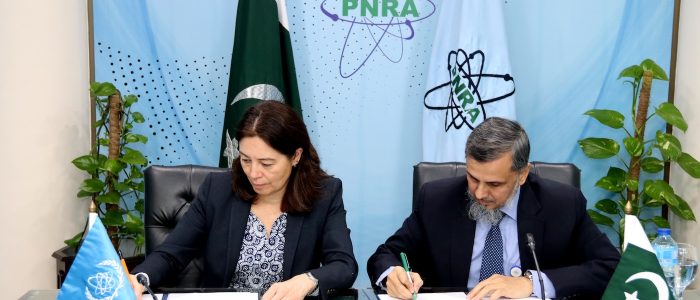
To improve the regulatory frameworks and to enhance the safety mechanism, PNRA has always appreciated its cooperation with IAEA. It holds membership in several IAEA Safety Standards Committees, including the Nuclear Safety Standards Committee (NUSSC), Transport Safety Standards Committee (TRANSSC), Waste Safety Standards Committee (WASSC), Radiation Safety Standards Committee (RASSC), Nuclear Security Guidance Committee (NSGC), the Global Nuclear Safety and Security Network (GNSSN), and the Commission on Safety Standards (CSS). It also closely coordinates with other IAEA frameworks and systems, including the International Nuclear and Radiological Event Scale (INES), the International Reporting System for Operating Experience (IRS), the Incident and Trafficking Database (ITDB), the Response and Assistance Network (RANET), the Regulatory Cooperation Forum (RCF), the Radiation Safety Information Management System (RASIMS), the International Generic Ageing Lessons Learned (IGALL) programme, and the United Nations Scientific Committee on the Effects of Atomic Radiation (UNSCEAR), among others, to ensure transparency, updates and it consistency with global nuclear safety standards implementation. PNRA will be celebrating its Silver Jubilee in 2026. While it’s a moment of pride for all of Pakistan, it also reminds us about the hard work that went into making PNRA one of the world’s top-notch nuclear regulatory authorities. PNRA’s Silver Jubilee will be celebrated all over Pakistan and the marvellous feat that PNRA has so far achieved.
This article was published in another form at https://cscr.pk/explore/themes/defense-security/pakistans-peaceful-uses-of-nuclear-technology-and-the-role-of-pnra/


Dr Rahat Iqbal is Associate Director Research at the Center for International Strategic Studies (CISS), Islamabad.