Pakistan reached a new milestone in its scientific journey with to its successful space venture. The Pakistan Space and Upper Atmosphere Research Commission (SUPARCO) completed the second phase of the selection of two astronauts for its human spaceflight program. After domestic shortlisting, the next step was rigorous medical, psychological, and aptitude assessments at the Astronaut Centre of China (ACC), in accordance with international spaceflight standards. After six months, the first Pakistani astronaut will board a Spaceflight to the Chinese Space Station (CSS) in late 2026. Pakistan’s human spaceflight mission is a watershed event for its national space program.
The event marks the materialization of the bilateral Astronaut Cooperation Agreement, signed in February 2025 with China. Pakistan is the first international partner of the Chinese Spaceflight Mission, reflecting cooperation at multiple levels: technical, institutional, and diplomatic. Human Spaceflight mission is one of the most safety-sensitive and technically demanding areas of international cooperation. Internationally recognized medical standards, mission protocols, operational discipline, and long-term commitment are a prerequisite for the mission. The two countries demonstrated institutional policy coordination by completing the astronaut selection process within a year through structured training pathways.
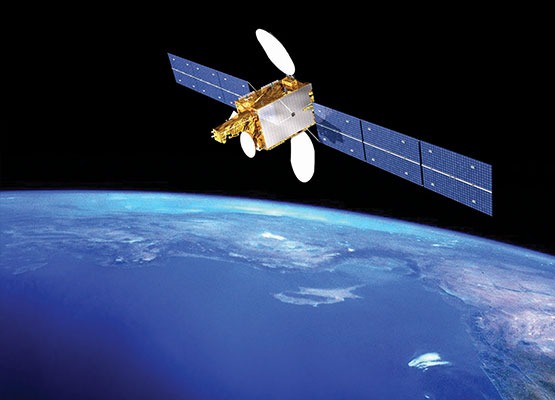
Pakistan’s space program is on the path of natural progression through commitment and cooperation. Pakistan’s international space cooperation dates back to the inception of its space program. For decades, the primary focus of cooperation was development of sateliites for peaceful uses (such as remote sensing, earth observation, and communication) and launch support. Human spaceflight mission illustrates a qualitative shift, from technical cooperation to deeper human and institutional integration. From agreement to execution, it signals SUPARCO’s professional competence and reliability
The implications of Pakistan’s human spaceflight mission are multifaceted. Its value lies not only in the mission itself but in the auxiliary effects it can generate for scientific development, human capital formation, and international standing. The mission is significant in providing scientific and technological gains. Astronauts will be trained in microgravity adaptation, spacecraft operation and maintenance, scientific research tasks, and emergency procedures in space.Moreover, the Chinese space mission will grant a Pakistani astronaut, the access to a fully functioning orbital laboratory designed for long-duration missions and scientific experimentation at the Chinese Space Station, Tiangong. Training and working in such a high-performance operational environment will equip astronauts with the knowledge that will strengthen the domestic ecosystem around aerospace engineering and space sciences. Exposure to specialized knowledge also enhances opportunities for Pakistan in emerging research sectors globally as well.
The space program will inspire national imagination. It shifts the perception from being at the receiving end of technology to a participatory role in the technological endeavor. It will foster a long-term commitment towards achieving development through technology. It will catalyze the government’s interest and focus on science, technology, engineering, and mathematics (STEM) education. Such efforts will break the psychological barrier for youth between aspirations and achievements in advanced fields. The scientific confidence gained through space missions will grab the attention of youth towards aerospace, aeronautical, and related fields.
Participation in the human space flight enhances Pakistan’s international profile as a reliable technological partner. It signals that Pakistan is not limited to peripheral space engagement; it can operate in advanced scientific collaborations. Pakistan’s adherence to high standards of training and operational discipline shows its commitment to international space norms. Pakistan does not see space as a competitive arena, but a pathway to sustainable development. This mission will serve as a long-term diplomatic capital to advance its peaceful space vision through meaningful international interactions around space governance, scientific cooperation, and future exploration frameworks.
Pakistan’s human spaceflight mission comes at a very strategic time when outer space is becoming central to national development worldwide. To make the most out of this mission, Pakistan’s future trajectory will be significant. This milestone shall be embedded as a catalyst for structural transformation in Pakistan’s national space strategy. Pakistan needs to focus on enriching its space program through increasing funding and strong collaboration between SUPARCO and other universities. Moreover, Pakistan needs to incentivize public-private partnerships in the specialized research and development (R&D) programs. The most important driver of future success will be institutional continuity in planning, policymaking, integration, and implementation. To amplify the impact of this mission, the government needs to develop astronaut training pipelines, expand research grants in space medicine and materials science, and integrate space technology into broader industrial policy. In a nutshell, Pakistan’s upcoming astronaut mission is more than a symbolic achievement. It implies the country’s commitment to advancing its space program. It is an apt example of the success of Pakistan’s space diplomacy, which materialized into tangible technological progress. This milestone is achieved by gradual capacity-building, institutional strengthening, and long-term scientific ambition. It marks a new phase of Pakistan’s space trajectory that will be written in laboratories, classrooms, research centers, and policy frameworks in the years that follow.
This article was published in another form at https://strafasia.com/pakistans-space-diplomacy-takes-flight/


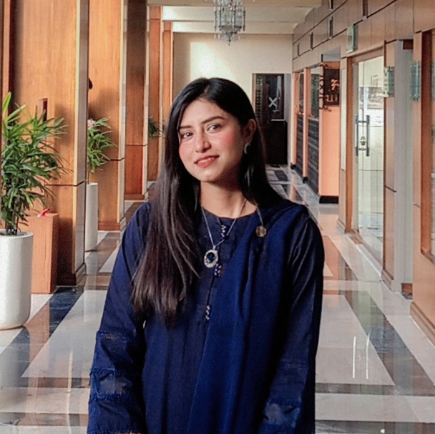
Areesha Manzoor is Research Assistant at the Center for International Strategic Studies (CISS), Islamabad.