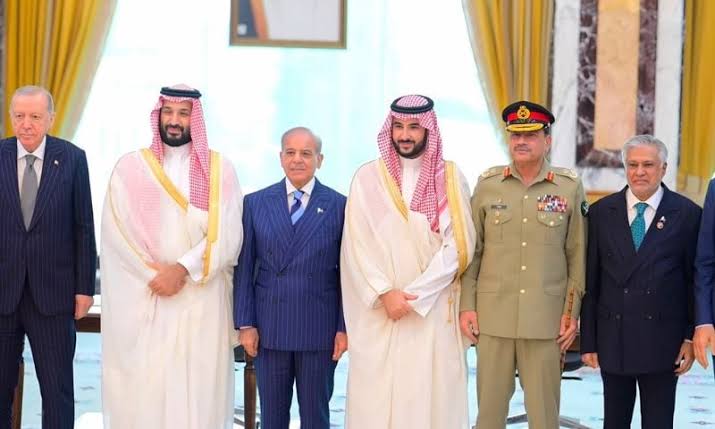
The Makkah Joint Defence Agreement between Pakistan, Saudi Arabia and Türkiye marks an important shift in regional security cooperation. The three countries have agreed to support one another without defining a permanent threat. Each state will retain its existing alliances, partnerships, and foreign-policy priorities. The agreement therefore creates a shared defence framework without requiring political alignment on every regional issue. It also places Pakistan at the centre of a wider security relationship linking South Asia, the Gulf, and Türkiye.
The main significance of the agreement lies in this flexibility. Pakistan, Saudi Arabia, and Türkiye operate in different strategic environments and have different security priorities. The Makkah Agreement allows them to cooperate on defence and deterrence, build their capabilities, and preserve their different strategic priorities. This makes the arrangement well suited to a regional environment in which states increasingly prefer multiple partnerships.
From Bilateral Ties to a Shared Framework
Pakistan, Saudi Arabia and Türkiye entered the Makkah Agreement with established military relationships and regular defence contacts. Pakistan and Saudi Arabia have conducted several bilateral exercise series, including Al-Samsaam and Al-Kassa, focused on counterterrorism, urban operations, route clearance and counter-IED training. In November 2025, personnel from Pakistan’s Special Services Group and Saudi forces also conducted the Al Battar-II exercise in Tabuk. Their defence relationship is further supported by longstanding training programmes, military exchanges and high-level military contacts. Pakistan’s wider role in regional security is also reflected in the Islamic Military Counter Terrorism Coalition (IMCTC), headquartered in Riyadh. Since 2017, the coalition has been led by former Pakistan Army Chief General Raheel Sharif, a retired four-star general.
Pakistan and Türkiye have also developed regular military cooperation through joint exercises, training and defence-industrial engagement. The Atatürk exercise series provides a continuing platform for special-forces cooperation. Atatürk-XIII, held in Pakistan in February 2025, brought together Pakistan’s Special Services Group and Turkish Special Forces for two weeks of counterterrorism training. The three countries have also trained together in broader multinational settings. Indus Shield 2024, hosted by the Pakistan Air Force, included both the Saudi and Turkish air forces among participants from 24 countries.
These engagements show that the Makkah Agreement builds on an established pattern of military cooperation. It brings existing bilateral ties into a shared framework and creates greater scope for coordinated training, defence cooperation and capability development.
Complementary Capabilities and Capability Development
The Makkah framework brings together three complementary defence capability profiles. Saudi Arabia provides the strongest financial base, a large defence market and a growing emphasis on localization under Vision 2030. The Kingdom allocated about $78 billion to the military sector in its 2025 budget, while the localization of military spending reached 24.89 per cent by the end of 2024, with a target of more than 50 per cent by 2030. This creates scope for joint ventures, licensed production, maintenance facilities and technology transfer with Pakistani and Turkish defence firms. Saudi Arabia can therefore provide the capital and market scale needed to support major joint programmes.
Türkiye contributes the most advanced high-technology defence-industrial base of the three. Its defence and aerospace sector records around $10.05 billion in exports, with more than 3,500 companies operating across unmanned systems, missiles, electronic warfare, radar, air defence, naval platforms and combat aircraft programmes. Systems such as the HİSAR and SİPER air-defence families, ATMACA and ÇAKIR cruise missiles, ASELSAN radar and electronic-warfare systems, and the MİLGEM naval programme illustrate the depth of its industrial and technological capacity.
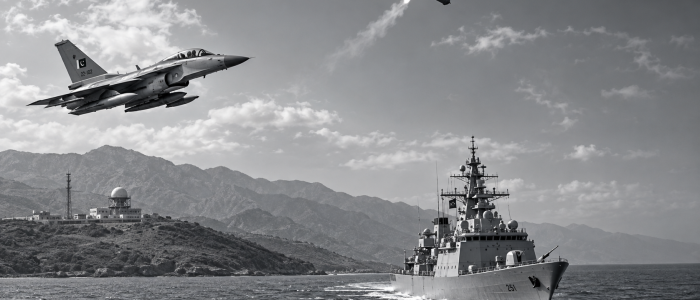
Pakistan contributes operational experience, military training capacity and an established defence-industrial base in combat aircraft production, avionics, maintenance and naval construction. Pakistan Aeronautical Complex produces the JF-17 multirole fighter and maintains dedicated overhaul facilities for the aircraft. PAC has also produced more than 100 military jets and 345 trainer aircraft. Pakistan’s experience with the JF-17 programme and local construction under the MİLGEM project demonstrates its ability to absorb foreign technology, integrate it into domestic production and sustain complex defence platforms.
The Turkish KAAN fifth-generation fighter programme illustrates how these capabilities could be combined. Saudi Arabia has held advanced discussions with Turkish Aerospace over participation in the programme, while Pakistan has also been linked to possible co-production and industrial cooperation. A trilateral model could combine Saudi investment and procurement capacity, Turkish aerospace technology and programme leadership, and Pakistani manufacturing, integration and operational experience. This would move cooperation beyond arms procurement towards joint investment, technology sharing, production and long-term capability development.
Pakistan and Türkiye already have a working model for this type of industrial cooperation. Under the MİLGEM programme, two corvettes for the Pakistan Navy were built in Türkiye and two in Pakistan, with technology transfer and local construction included in the arrangement. The programme demonstrates how defence ties can move from a buyer-seller relationship towards co-production and industrial participation. Similar models in aerospace, missiles, unmanned systems, air defence and naval technologies could allow the three countries to pool capital, technology, production capacity and operational experience.
The Makkah framework can therefore provide a political basis for deeper defence-industrial cooperation. Saudi Arabia can provide financing and scale, Türkiye advanced technology and systems, and Pakistan manufacturing capacity, training, maintenance infrastructure and operational experience. Together, these strengths can support indigenous capability development and sustained trilateral defence cooperation.
A Flexible Regional Framework
The Makkah Agreement does not require its members to abandon their existing strategic relationships. Saudi Arabia will retain its close security ties with the United States, Türkiye will remain within NATO, and Pakistan will continue its partnerships with China, Iran and the Gulf states. The agreement adds another layer of cooperation while allowing each state to preserve its own foreign-policy priorities. This gives the framework the flexibility to accommodate different threat perceptions and regional interests.
Pakistan holds an important position within this arrangement. Its established military ties with Saudi Arabia and Türkiye, strategic location between South Asia and the Gulf, and ability to maintain working relations across region give it a wider role in the framework. Makkah also reflects Pakistan’s growing relevance beyond the traditional South Asian security context. The significance of the agreement therefore goes beyond a collective-defence commitment. It brings together three states with different alignments and complementary capabilities under one security framework. Its value will lie in how effectively they use this framework for deterrence, capability development and sustained defence cooperation. If that approach continues, Makkah could offer a practical model of regional security cooperation based on shared interests without requiring fixed political blocs.
This article was published by the West Asia Watch in another form at https://westasiawatch.com/opinion/the-makkah-agreement-and-a-new-model-of-regional-security/


Syed Ali Abbas is Research Officer & Comm Officer at the Center for International Strategic Studies (CISS) Islamabad. He is also an MPhil scholar in the Department of Strategic Studies at the National Defense University (NDU) Islamabad.