Introduction
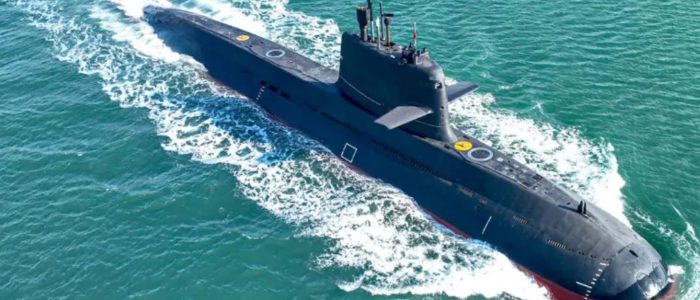
Pakistan Navy launched its fourth Hangor-class Submarine, which is undergoing sea trials and is in the final stage of its induction. It is developed with the assistance of China’s Wuchang Shipbuilding Industry in Wuhan. The first three of this class of submarines were developed and entered into sea trials in 2024 and 2025. The remaining four are to be developed at Karachi Shipyard and Engineering Works Ltd. (KS&EW) under the Transfer of Technology (ToT) agreement.
This development is significant as it seeks to balance rising maritime threats in the Indian Ocean Region (IOR), driven by India’s expanding and increasingly assertive naval posture. Similarly, the Hangor-class submarine is diesel-electric but is fitted with an Air-Independent Propulsion (AIP) system, which allows it to generate power underwater without surfacing, thereby enhancing endurance and stealth. This analysis provides technical parameters and operational efficacy of the Hangor-class submarine, examines the operational advantages of AIP integration, and assesses how these capabilities contribute to balancing India’s growing maritime presence in the IOR.
Technical Parameters and Operational Efficacy
On 17th December 2025, the Hangor-class codenamed “Ghazi” Submarine, which is a Type 039B Yaun-Class Chinese Submarine, was launched in Wuhan, China. The Inter-Service Public Relations (ISPR) reiterated that the submarine is undergoing “rigorous sea trials and is in the final stages of being handed over to Pakistan”. The report suggests that the submarine is 76 meters long and has a displacement of 2800 tons. It has six 533mm torpedo tubes, which are capable of firing torpedoes and launching missiles. The submarine is diesel-electric but retrofitted with an AIP system, which allows it to operate underwater without snorkelling, unlike conventional diesel-electric submarines, which depend on air for their engine combustion. The AIP system increases submarine endurance and stealth while avoiding detection by the adversary, as the submarine can remain underwater for three to four weeks. While the traditional submarines are noisy, the engine makes noise while charging and even releases exhaust fumes during the combustion process, further undermining stealth and the element of surprise, AIP system prevents this.
The type of AIP technology retrofit is not revealed yet. However, the reports suggest that the Hangor-class submarines are probably equipped with the Stirling AIP system. The Stirling AIP involves combustion, but the exhaust fumes are recycled during the process rather than being released. This reduces the thermal detection and acoustic signatures of submarines. However, the Stirling-based AIP submarine is a little less efficient than the Fuel-Cell AIP system, as it involves piston movement during the combustion process. But it is much better than the Module d’Energie Sous-Marin Autonome (MESMA) AIP systems retrofitted in Khalid-class submarines.
The MESMA uses liquid oxygen and Ethanol to produce electrochemical reactions and provide combustion. But during the process, it releases a lot of heat, leaving high acoustic and thermal signatures. This AIP system increases the boat’s endurance but at the cost of stealth, which is compromised during the combustion process, making it less efficient. That makes these Hangor-class submarines significant, as they would be much better than the decade-old Khalid and Hashmat-class submarines, which would significantly increase endurance, provide stealth, and improve operational efficacy.
Balancing the Indian Threat
Following India’s massive naval buildup and intentions in the IOR, the development of these submarines holds immense significance. The May 2025 conflicts reflect Pakistan’s Navy maintaining sea denial through Anti-Access/Area Denial (A2/AD) against the Indian Navy. The Indian Navy had an ambition to attack from the waters to the Pakistan mainland. However, the continuous patrolling in the waters deterred the Indian Navy from taking any action. Similarly, after the conflict Indian government and military have been making statements and showing an intention of using the maritime domain to attack Pakistan in the future. Such as their Minister of Defence Rajnath Singh’s statement regarding Karachi, when he said, “one route to Karachi passes through the Sir Creek”. Then he openly stated that “If Pakistan does any unholy act this time, it is possible that the opening will be done by our navy”.
Apart from this, senior Indian military commanders have publicly commented on the possibility of future conflict extending into the maritime domain. They further stated that, “If another military conflict escalates, the probability of navies being actively involved is high.” Such statements are reinforced by rapid developments in the maritime domain. For instance, the Indian Navy already operates two aircraft carriers, while INS Vishaal, envisioned as the third, is under development. Similarly, India’s nuclear-powered submarine fleet continues to expand. The Arihant-class submarines are already operational, while INS Aridhaman and the S4* submarines are expected to be commissioned by 2026. Moreover, the Indian Navy launched Project-75I to equip its conventional submarines with Fuel-Based AIP technologies. India justifies these developments through its ambition to become a blue-water navy. However, if conflict were to escalate, would these inductions not be centered around Pakistan? And would India realistically refrain from employing its expanding naval assets exclusively in such a scenario?
Considering the Indian Naval modernization, the acquisition of Hangor-class submarines holds immense significance in deterring India’s expanding naval footprints and growing sub-surface capabilities in the IOR. Their induction will significantly enhance the Pakistan Navy’s undersea presence by improving endurance, stealth, and the ability to remain submerged for extended periods. Collectively, these capabilities will act as a force multiplier, enabling the defence of the maritime territories and further strengthening sea-denial operations, and limiting an adversary’s ability to establish naval superiority in the waters. However, in the long run, the nuclear-powered submarines would also be necessary to strategically deter India’s broader naval ambition. For which they are developing the next generation of nuclear-powered submarines, S5. So, in order to deter such acquisition, Pakistan needs to shift its priorities in developing and acquiring nuclear-powered submarines.
Conclusion In short, submarine development is both significant and necessary to maintain regional balance and mitigate maritime threats. India’s Naval buildup is no longer merely aspirational; it is increasingly translating into operational reality, with the Indian Navy expanding its fleet and enhancing its power-projection capabilities. In the near term, the induction of modern conventional submarines would provide the Pakistan Navy with a critical advantage by strengthening sea-denial and deterrence at the conventional level. However, over the longer term, maintaining assured second-strike capability would require the development of nuclear-powered ballistic missile submarines (SSBNs), which remain essential for credible deterrence and for countering India’s expanding undersea and maritime ambitions.
This article was published in another form at https://cscr.pk/explore/themes/defense-security/the-strategic-weight-of-pakistans-aip-based-hangor-class-submarines/


Mr Saad Riaz is Research Fellow at the Center for International Strategic Studies (CISS), Islamabad