As efforts continue to prevent the conflict in the Gulf from widening, Iran on Friday called for expanding strategic cooperation with Pakistan, describing Islamabad’s diplomatic engagement as an important contribution to regional peace and stability.

“Pakistan has played a constructive diplomatic role in facilitating negotiations and advancing efforts towards regional peace and stability,” Iran’s Ambassador to Pakistan Reza Amiri Moghadam said while delivering the keynote address at a roundtable discussion, organised by the Centre for International Strategic Studies.

“Strengthening our bilateral cooperation is essential for addressing contemporary security challenges in West Asia,” he said.

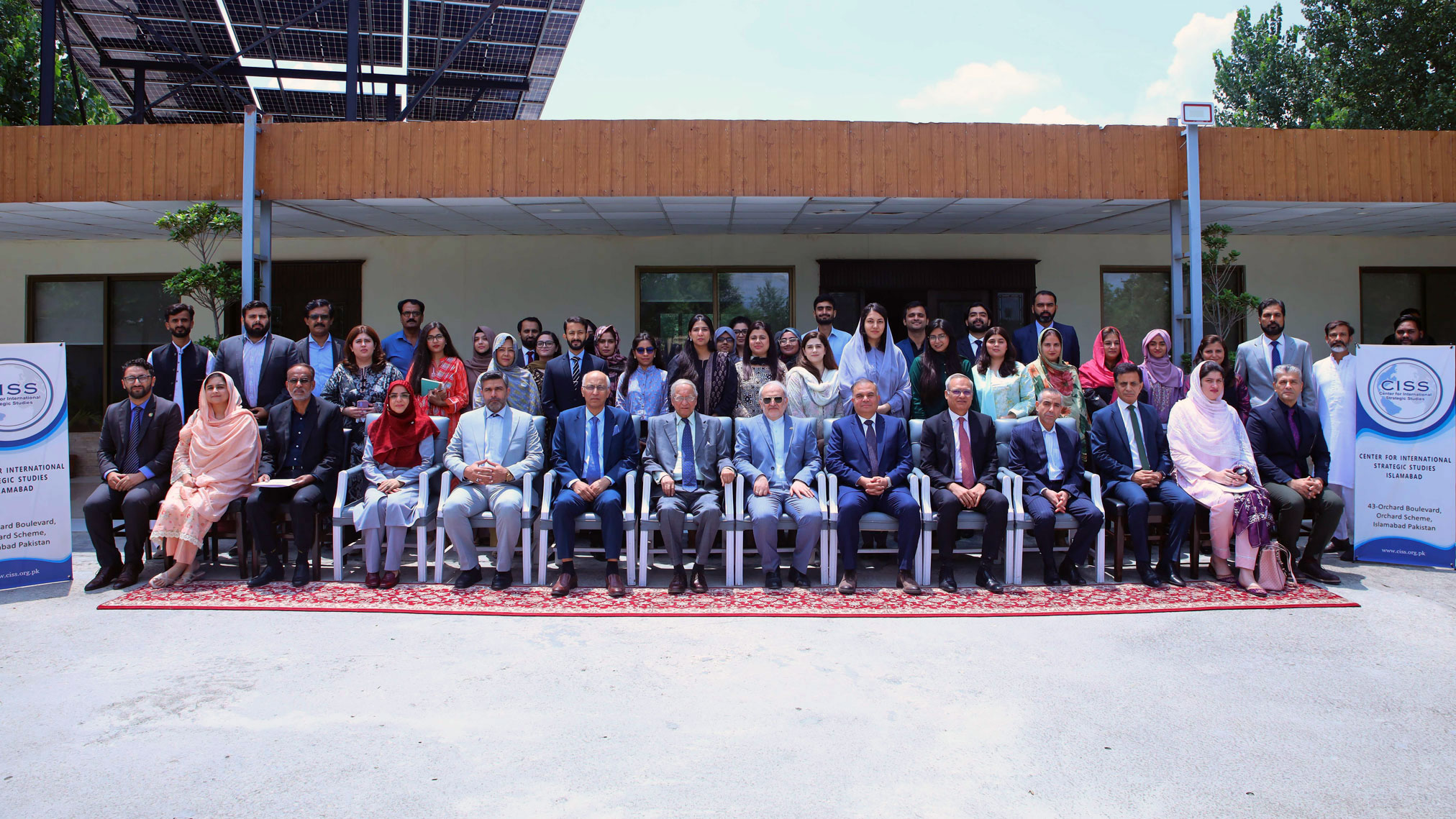
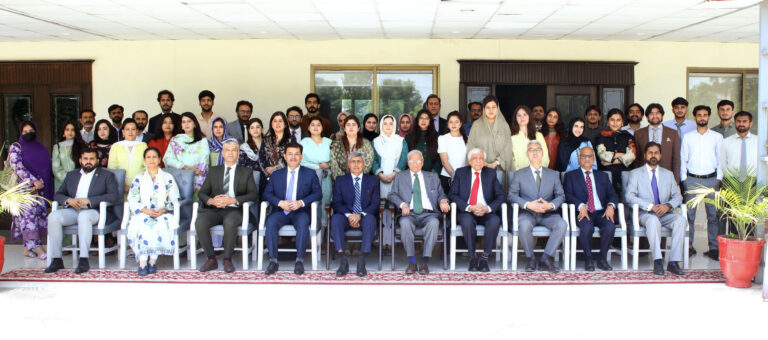
The discussion, titled Pakistan-Iran Relations and Strategic Stab­i­lity in West Asia, brought together diplomats, academics, defence analysts and researchers to examine the future trajectory of Pakistan-Iran relations against the backdrop of an increasingly volatile regional security environment.

Opening the discussion, CISS Exec­utive Director Amb Ali Sarwar Naqvi said the recent escalation had generated fresh uncertainties for regional peace, maritime security and global energy markets, making sustained dialogue and regional engagement more important than ever.

Former ambassador Masood Khan said Pakistan’s consistent advocacy of peaceful dispute resolution and its ability to maintain constructive relations with regional and international stakeholders had strengthened its credibility as a facilitator of dialogue, confidence-building measures and de-escalation.

Director General of the Institute of Strategic Studies, Islamabad, Amb Moinul Haque said the resilience and national unity displayed by the Iranian people during the recent conflict had played an important role in enabling the country to confront the challenges arising from the crisis.

Dr Nazish Mahmood of Quaid-i-Azam University said greater cooperation between Pakistan and Iran in border security, trade, energy and regional connectivity could contribute meaningfully to long-term regional stability.

Discussing the maritime dimension of the crisis, retired Rear Admiral Faisal Shah highlighted the strategic importance of the Strait of Hormuz as one of the world’s principal energy chokepoints and cautioned that prolonged instability there could carry far-reaching consequences for international trade, energy security and maritime stability.

Dr Bilal Zubair, director of research at CISS, said the recent conflict had brought Pakistan and Iran closer than ever before, with their shared border, economic interdependence and common concerns over regional instability reinforcing bilateral cooperation and reshaping the relationship across political, economic and strategic domains.

MEDIA COVERAGE

Business Recorder
https://www.brecorder.com/news/amp/40431693

Dawn
https://www.dawn.com/news/amp/2018233

Arab News
https://www.arabnews.com/node/2652238/amp

Share.

Comments are closed.

Cek DA PA Gratis

Mr Syed Ali Abbas

Research Officer/ Comm Officer/ Managing Editor CISS Insight

Syed Ali Abbas is a Research Officer/Communication Officer at the Center for International Strategic Studies (CISS), Islamabad. Previously, he served as an associate editor at Indus News Network. His areas of interest include Middle East politics, military modernization, foreign policy, and nuclear politics. He has contributed to various platforms, including The National Interest, South Asian Voices, and others.

Dr Anum Riaz

Associate Director Research

Dr. Anum Riaz is the Associate Director Research at the Center for International Strategic Studies, Islamabad. She holds a Ph.D. in Political Science from the Department of Political Science at Bahauddin Zakariya University, Multan. She also possesses M.Phil. and M.Sc. degrees from the Department of Defence and Strategic Studies at Quaid-i-Azam University, Islamabad. Additionally, she has taught BS and Master’s students at the Department of Political Science at Bahauddin Zakariya University, Multan. Her areas of interest include strategic studies, international relations, international nuclear politics, the nuclear non-proliferation regime, arms control and disarmament, as well as traditional and non-traditional security issues.

Dr Bilal Zubair

Director Research

Dr. Bilal Zubair has worked as an Assistant Professor at the National Defence University Islamabad and Lecturer at the National University of Science and Technology. He holds a Ph.D. and M. Phil. in International Relations from Quaid-e-Azam University, Islamabad. Dr. Zubair is author of the book Chinese Soft Power and Public Diplomacy in the United States (Palgrave Macmillan, 2024) and contributed to several journal articles and book chapters focusing on soft power, diplomacy, and China’s role in international relations.

His research has been published in various academic journals, and he has presented at international conferences Dr. Zubair has also been an active reviewer and editorial board member. His professional interests include great power politics, and the role of communication in global diplomacy.

Mr Mobeen Jafar Mir

Research Officer

Mobeen Jafar Mir is a Research Officer at the Center for International Strategic Studies (CISS), Islamabad. His research focuses on U.S. foreign policy, particularly in the areas of strategy, technology, and arms control. He is currently pursuing an M.Phil. in International Relations at the School of Politics and International Relations, Quaid-i-Azam University, Islamabad. He can be found on Twitter @jafar_mobeen.

Exit mobile version