What Happened?
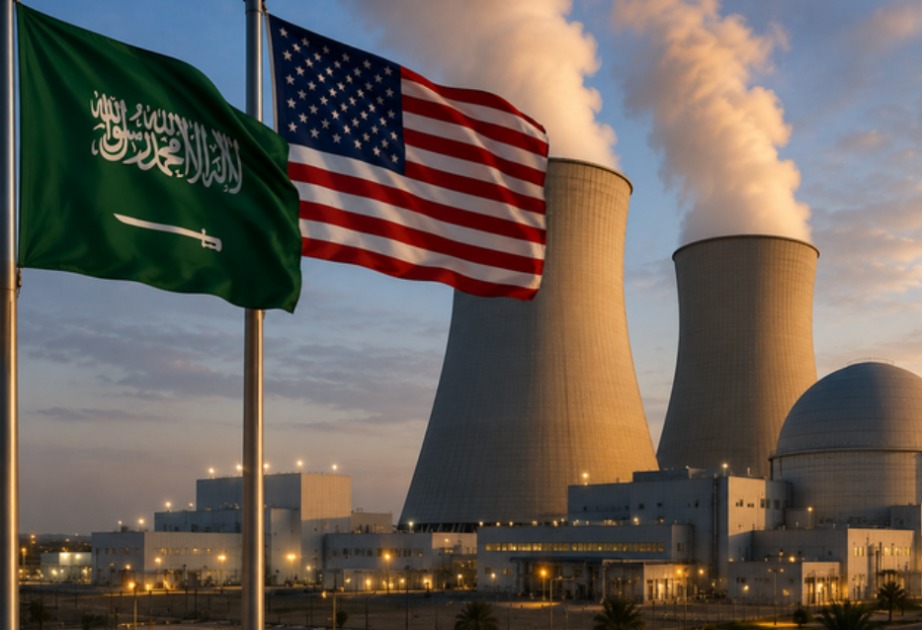
On 22 July 2026, U.S. Energy Secretary Chris Wright and Saudi Energy Minister Prince Abdulaziz bin Salman signed a 30-year civil nuclear cooperation agreement under Section 123 of the U.S. Atomic Energy Act, following President Donald Trump’s reported approval the previous day. The agreement, accompanied by a bilateral safeguards arrangement, now awaits congressional review before entering into force.
The agreement provides the legal basis for broad U.S.-Saudi cooperation in the peaceful use of nuclear energy. It also strengthens the position of American companies competing for Saudi Arabia’s planned nuclear power program while limiting the space available to other suppliers who compete with the U.S.
On 23 July 2026, President Trump publicly stated on Truth Social that the civil nuclear deal involves “no enrichment of material” and pertains only to non-military use. He further stated that its approval is “totally subject to Saudi Arabia joining the very respected and successful Abraham Accords,” adding that the United States is “not opposed to Civil (Non-Enriched) Nuclear Facilities.”
This statement introduces a significant qualification, and an apparent contradiction, because earlier reporting on the signed agreement indicated that it permits uranium enrichment and reprocessing and does not require adoption of the IAEA Additional Protocol. Until the agreement and accompanying safeguards text are made public, it remains unclear whether the President’s statement reflects the operative legal terms, a condition for implementation, or a subsequent policy direction.
The arrangement is reported to rely on Saudi Arabia’s existing IAEA Comprehensive Safeguards Agreement, additional bilateral verification measures, and the legal conditions contained in Section 123 of the U.S. Atomic Energy Act. The precise scope of these measures, including the treatment of enrichment and reprocessing, will become clearer once the relevant texts are publicly available.
How Does the Agreement Address Proliferation Concerns?
If incorporated into the operative agreement, President Trump’s no-enrichment condition would remove the principal dual-use pathway associated with uranium enrichment. Saudi Arabia would remain an NPT non-nuclear-weapon state subject to its IAEA Comprehensive Safeguards Agreement, bilateral verification measures, and the statutory non-proliferation requirements of U.S. nuclear cooperation law.
However, the assessment must remain provisional because earlier accounts of the signed arrangement reported a legal pathway for enrichment and reprocessing and no requirement for Saudi Arabia to adopt the IAEA Additional Protocol. The President’s statement addresses enrichment but does not separately clarify reprocessing or the status of enhanced IAEA verification.
Even with these unresolved questions, Saudi Arabia remains within the NPT and international safeguards system. The arrangement therefore does not create an India-type exemption from the non-proliferation framework.
Why Has Washington Accepted This Arrangement?
The agreement reflects strategic, commercial and geopolitical considerations. It creates a major commercial opportunity for the U.S. nuclear industry, strengthens the long-term U.S.-Saudi strategic partnership, and seeks to keep Saudi Arabia’s future nuclear program within an American technological ecosystem.
President Trump’s 23 July statement has also publicly re-attached the agreement to Saudi Arabia joining the Abraham Accords. This contrasts with earlier indications that civil nuclear cooperation had been separated from Saudi normalization with Israel.
The administration appears to have judged that a closely controlled civil nuclear program under U.S. partnership is preferable to Saudi Arabia pursuing comparable capabilities through less restrictive suppliers. The exact nature of those controls, however, will depend on how the President’s stated conditions are reflected in the operative agreement.
Comparison with the US-India Nuclear Agreement
The Saudi arrangement and the U.S.-India civil nuclear agreement fall into fundamentally different legal and strategic categories.
As an NPT non-nuclear-weapon state, Saudi Arabia’s civil nuclear program continues to operate under international safeguards. The agreement neither exempts Saudi Arabia from the core non-proliferation framework nor legitimizes an unsafeguarded military nuclear program. If the President’s no-enrichment condition becomes operative, the distinction will be even clearer.
The U.S.-India agreement, by contrast, granted India exceptional access to international civil nuclear cooperation despite its remaining outside the NPT and retaining an unsafeguarded nuclear-weapons program. In effect, it accommodated India outside the established non-proliferation framework rather than bringing it within that framework.
The 2005-2008 U.S.-India civil nuclear agreement remains the single most consequential departure from established non-proliferation practice since the creation of the Nuclear Suppliers Group (NSG). India, a non-NPT nuclear-armed state that had already tested nuclear weapons in 1974 and resumed testing in 1998, received an exceptional NSG waiver and a Section 123 Agreement after negotiating a civil-military separation plan largely on its own terms.
Only the facilities voluntarily declared civilian by India were placed under India-specific IAEA safeguards (INFCIRC/754). Eight power reactors, the Fast Breeder Test Reactor (FBTR), the Prototype Fast Breeder Reactor (PFBR), key enrichment and reprocessing facilities, and much of India’s nuclear fuel cycle remained permanently outside international safeguards. India also retained discretion over whether future indigenous breeder reactors would be designated as civilian under its separation plan.
The consequences continue to unfold. Imported uranium now fuels India’s safeguarded civilian reactors, allowing more indigenous uranium to support its unsafeguarded strategic program. This has enabled the growth of the world’s largest and fastest-growing unsafeguarded nuclear infrastructure, including indigenous PHWRs, fast breeder reactors, research reactors and associated reprocessing facilities outside comprehensive IAEA verification.
The 2008 arrangement did more than expand India’s access to international nuclear commerce. By easing its uranium shortage, imported fuel increased flexibility in allocating indigenous uranium between safeguarded civilian reactors and the unsafeguarded strategic program. From a non-proliferation perspective, this indirectly enabled continued vertical expansion without breaching the agreement’s formal terms.
The 500 MWe PFBR at Kalpakkam reached criticality on 6 April 2026, further illustrating this trend. Under India’s separation plan, the PFBR remains outside IAEA safeguards, despite its capacity to produce additional plutonium through breeding blankets. Its commissioning is expected to significantly increase India’s annual weapons-grade plutonium production capacity, with additional planned breeder reactors expanding it further. This is a continuing consequence of the 2008 exceptional arrangement.
The India Exception
The India-specific arrangement was presented internationally as bringing India “closer to the non-proliferation mainstream.” It instead legitimized selective exceptionalism and catalyzed vertical proliferation. A non-NPT nuclear-armed state received access to global nuclear commerce while retaining a substantial unsafeguarded nuclear-weapons complex outside comprehensive IAEA safeguards. Geopolitical considerations thus prevailed over “universal” non-proliferation principles.
Claims that the India agreement strengthened the non-proliferation regime are difficult to reconcile with its practical effects. The regime accepted facility-specific rather than comprehensive safeguards, permitted nuclear commerce without NPT membership, and established that strategic partnerships could override established norms. In effect, all states remained equal, but some became more equal than others.
Criteria-Based Approach and Pakistan
When Pakistan later sought comparable civil nuclear cooperation, several Western analysts advanced a “criteria-based approach” rather than treatment comparable to India. They argued that any future cooperation should depend on additional non-proliferation commitments, export-control performance and “responsible” nuclear behavior.
This reflected inconsistent standards. India’s exceptional accommodation became the starting point for imposing additional conditions on Pakistan, rather than a precedent applied equally. The debate thus shifted from universal rules to country-specific strategic judgments.
Conclusion
The U.S.-Saudi agreement is best understood as a strategic and commercially driven adjustment within the existing non-proliferation framework, although its precise fuel-cycle terms remain publicly unsettled. Saudi Arabia remains an NPT non-nuclear-weapon state and its civil program remains under international safeguards. President Trump has stated that there will be no enrichment and that the deal is conditional on Saudi Arabia joining the Abraham Accords, but the legal effect of these conditions will remain uncertain until the agreement and accompanying safeguards text are made public.
The U.S.-India agreement was fundamentally different. It gave a non-NPT nuclear-armed state access to global nuclear commerce while allowing major parts of its nuclear infrastructure and weapons-related production capacity to remain outside comprehensive safeguards. This has exacerbated South Asian strategic instability and contributed to the sustained strategic asymmetry that continues to shape the region.
The Saudi arrangement operates within the existing system. The India agreement created a major exception to it. That exception reinforced perceptions of discrimination, facilitated India’s continued vertical expansion, and widened strategic asymmetry in South Asia, with lasting implications for regional stability and the credibility of the global non-proliferation regime.

Dr Zahir Kazmi is Arms Control Advisor at the Strategic Plans Division, where he has also served as the Director General of the Arms Control & Disarmament Affairs Branch. He is a former Brigadier. The views expressed are solely of the author and not necessarily government policy