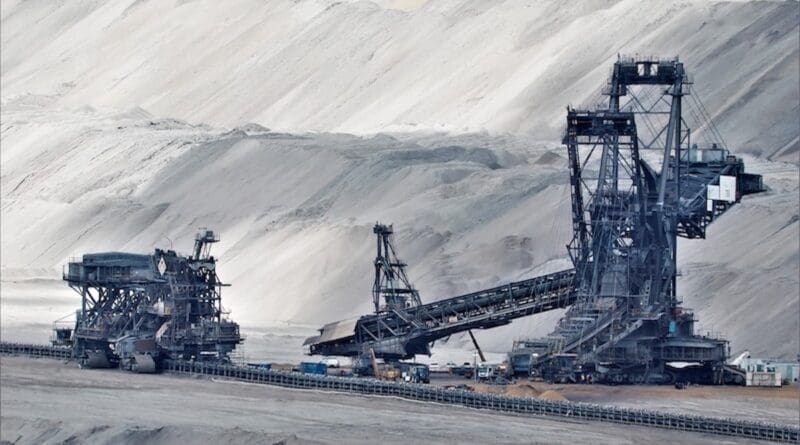
Critical minerals are playing a key role in transforming the geoeconomics and geopolitics of the contemporary world. Owing to their unique characteristics, the critical minerals including cobalt, lithium. nickel, rare earth elements, copper, and platinum, are considered essential components of technological modernization in the 21st Century. These minerals are widely used across various sectors, including defence, electronics, telecommunications, energy, and aerospace. Due to their importance in technological advancement in both military and civilian domain, industrialized economies such as the United States (US) and China are making concerted efforts to maintain control over the critical minerals which are vital in processing advanced military and non-military technologies.
Amid intensifying new great-power competition, US President Donald Trump stated at the Pentagon that his “one big beautiful bill” had saved billions of dollars to secure critical minerals. These resources, he argued, would support technological advancement in the military domain, including precision-guided weaponry, advanced communications, and AI-driven autonomous warfare platforms. In this regard, the US Defense Logistics Agency (DLA) has signed contracts to stockpile large quantities of critical minerals, including those essential for clean and renewable energy technologies.
In contrast, China is considered the world’s leading producer of these critical minerals, with advanced processing and refining capabilities. Through long-term investments and trade opportunities, Beijing has secured access to mineral-rich regions such as Southeast Asia, Africa and Latin America. China produces approximately 70% of the world’s rare earth elements, manufactures about 93% of high-strength permanent magnets, and controls up to 95% of global processing and refining capacity. As a dominant stakeholder in the critical minerals supply chain, China has imposed restrictions on materials used for military purposes. Resultantly, foreign companies interested in imports of these critical minerals are now required to obtain special licenses.
Against this backdrop, and in an effort to ease tensions stemming from trade competition over critical minerals, US President Donald Trump and Chinese President Xi Jinping held a sideline meeting during the International Asia Forum in October 2025. During the 90 minutes meeting, both leaders reached a consensus on temporarily easing trade pressures created by stringent policies on both sides. The US agreed to reduce certain tariffs on Chinese goods, while China committed to resuming the purchase of the US agricultural commodities and suspending the export restrictions on rare earth metals.
Although the meeting appeared to be beneficial for both countries, it failed to resolve deeper disagreements over technology and long-term competition. Dennis Wilder, a professor at Georgetown University who previously worked on China as well as for White House’s National Security Council, stated in an interview with Al Jazeera that “the apparent results of this meeting will be a pause and a small rollback in the trade war,”. Several analysts have similarly described the outcome as a trade truce, noting that the agreed deliverables have yet to be fully implemented.
China’s Correspondent to Al Jazeera, Katrina Yu, during her reporting on the Trump–Xi meeting held in Busan, South Korea, stated that “rare earths are critical for the production of everything from smartphones to headphones to, of course, military defence weaponry, fighter jets and tanks,”. She further stated that “this is a national security issue for Trump, and the problem for him is that China dominates this industry”.
In this regard, the US is making efforts to develop an independent supply chain that does not require Chinese assistance. Seeking inspiration from industrial teaching and the principles of Alexander Hamilton, the founding father of America, the recent US national security strategy emphasized reducing dependence on foreign suppliers for strategically important materials and components. This approach advocates strengthening domestic production capabilities, securing resilient supply chains, and ensuring access to critical minerals necessary for national defense and economic prosperity. In the wake of these developments, several geopolitical fault lines have emerged along which great powers, primarily the US and China, are competing for access to critical mineral rich regions, particularly in South America and Africa. To this end, President Trump is in search of opportunities to gain access to mineral-rich countries, including those in South America, as well as Greenland and Canada. While delivering a speech at the World Economic Forum in Davos, Switzerland, President Donald Trump stated that he was aiming for “immediate negotiations to acquire Greenland for national security reasons,” while asserting that he would not use force. On the other hand, during the press briefing on June 26, this year, Canadian Prime Minister Mark Carney stated that Canada is working hard to position itself as substitute to China in the supply of critical minerals. In the broader context, the European Union (EU) has adopted the Global Gateway Strategy, aimed at bolstering smart, clean, and secure links in energy, transport, communications, and digital sectors, as well as enhancing healthcare, education, and research mechanisms across the globe. Given the growing significance of the critical minerals for technological advancements, competition over these resources are likely to intensify. In the current geopolitical scenario, critical minerals can no longer be viewed merely as economic commodities, as they were in the past; rather, they have emerged as essential strategic assets.
This article was published by the Eurasia Review in another form at https://www.eurasiareview.com/31072026-great-power-competition-and-the-global-race-to-secure-critical-minerals-oped/

Dr Rahat Iqbal is Associate Director Research at the Center for International Strategic Studies (CISS), Islamabad.