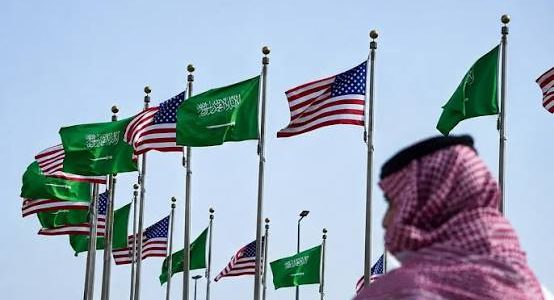
On 22n July, the Trump administration announced it would sign a civil nuclear deal with the Kingdom of Saudi Arabia, allowing the export of nuclear technology to Riyadh. However, According to While House ,the deal, called a 123 agreement, is centred on ratification of the Abraham Accords. By signing the Abraham Accords, KSA would officially recognize the state of Israel, requiring normalizing peaceful relations with Israel. The US-Saudi peaceful nuclear deal comes at a time when the global nuclear order is already eroding. As the international arms control architecture has already been dismantled following the erosion of the New START and the failure of the NPT review conference to meet its stipulated goals, the recent US-KSA peaceful nuclear deal will not bode well considering the aspiration of several other countries to acquire the same technology, let alone e the nuclear program of Iran. Moreover, this recent civil nuclear arrangement veers off the gold standard nuclear arrangement with the UAE, allowing KSA to reprocess nuclear waste and enrich uranium. Though the US administration has imposed strict inspection measures and non-proliferation mechanisms, critics believe that the chances of weapons-grade enrichment cannot be ruled out. With this deal, the United States will assist KSA in establishing a civil nuclear program; however, analysts believe that this bilateral arrangement could set off a regional arms race.
The official text reflects that the United States has agreed to assist Saudi Arabia in fulfilling the kingdom’s energy requirements through the peaceful uses of nuclear technology. Under this deal, the US will assist KSA in diversifying its energy mix with viable energy alternatives; however, it also includes a uranium enrichment facility that American companies would operate. Previous negotiations on the exchange of nuclear technology between the US and KSA required Saudis to accept the additional protocol that allows enhanced inspection by the UN nuclear watchdog; however, this deal has no such provision. In the absence of the Additional Protocol, American companies will not be able to manage “black box enrichment facilities.”
KSA’s struggle to acquire peaceful nuclear technology is not a recent phenomenon; back in 2018, Crown Prince Mohammad bin Salman expressed his willingness to acquire nuclear weapons in case Iran developed a nuclear bomb. The officials in Riyadh believe that the ongoing US-Israel war against Iran will encourage Tehran to expedite the enrichment of fissile materials. This bilateral arrangement will also urge other states in the region to pursue the nuclear option, ushering in a nuclear competition in the Middle East.
Similarly, the latest nuclear deal between the Kingdom and the US signifies a deviation from the 2009 gold standard civil nuclear deal between the UAE and the US. As per that deal, the UAE decided to forgo its domestic uranium enrichment and nuclear waste reprocessing while adhering to the obligations of the IAEA’s Additional Protocols. Unlike the UAE-US deal, the provision of an enrichment facility in the agreement and the capability to reprocess nuclear waste could offer KSA an opportunity to abandon its civilian purpose and pursue nuclear waste processing.
In Tel Aviv, this bilateral arrangement has been viewed with resentment, expressing anxiety about a Saudi deal that would likely influence other nations to seek nuclear enrichment programs. As per the White House, the deal is contingent on Riyadh’s signing the Abraham Accords. The prospects of normalization of ties between Riyadh and Israel seem unlikely in the absence of diplomatic negotiation for the establishment of a Palestinian state. With the US condition of joining the Abraham Accords, a nuclear deal with Riyadh seems in a diplomatic limbo. However, prospects of its materialization do not dim, facing a mere delay in case the kingdom refuses to recognize Israel. In the Middle East, the US needs KSA to counter threats from the Iranian regime, and with this nuclear settlement, the Trump administration has kept Riyadh in its camp, insulating the kingdom from betting on a Chinese nuclear alternative.
This latest civil nuclear partnership between the US and KSA comes at a time when one stakeholder, the US, is involved in waging war against Iran. At this time, Iran will not perceive this civil nuclear partnership in a positive manner, perceiving the deal as an offensive maneuver. The ongoing American onslaught against Iran already questions the feasibility of Khamenei’s anti-nuke fatwa. Against such a polarized environment, potential nuclearization of KSA may push the region into crisis, creating a security dilemma for other states like Turkey and Egypt. In response to this nuclear settlement, Turkiye and Egypt may explore the nuclear option for their security It can be concluded that, the US-KSA civil nuclear deal would ultimately hasten nuclear competition in the Middle East. Through this nuclear settlement, though, KSA would be able to get US support in reducing the country’s dependence on hydrocarbons; the Middle East would descend into overt nuclearization, casting dire consequences for strategic stability in the region.
This article was published by the Centre for Strategic and Contemporary Research in another form at https://cscr.pk/explore/themes/defense-security/how-the-saudi-us-nuclear-deal-ushers-in-nuclear-competition-in-the-middle-east/


Ms Nawal Nawaz is Research Assistant at the Center for International Strategic Studies (CISS), Islamabad.