In the early hours of Saturday, 28 February 2026, the United States (US) and Israeli militaries launched a war against Iran, targeting leadership headquarters, intelligence nodes, air defence sites, command-and-control networks, and internal security organs. The Trump administration says it launched strikes against Iran to protect the US from imminent threats emanating from the Iranian regime. Despite President Trump’s call for the largest US military build-up in the Middle East since the 2003 invasion of Iraq, the Iranian government did not launch a pre-emptive strike against the US. The deployment by the US in the Middle East included two aircraft carriers, accompanying warships, fighter jets, and aerial refuelling aircraft. The Trump administration had been telegraphing such threats from Iran since mid-January; however, there was no indication of a coming Iranian attack on the US, its allies, or its bases in the region, making these attacks by the US preventive in nature rather than pre-emptive strikes aimed at deterring Iran. Even the Pentagon told Congress that no intelligence showed Iran was preparing to strike before the US attack. Therefore, US–Iran nuclear talks failed not because of imminent threats from Iran’s nuclear programme, but due to Washington’s unsubstantiated threat claims and maximalist demands. Despite Tehran’s readiness to negotiate under International Atomic Energy Agency (IAEA) safeguards, the Trump administration insisted on zero enrichment, missile rollbacks, and regime change, ultimately derailing nuclear diplomacy.
Contrary to President Trump’s fears regarding the development of Iran’s nuclear programme, his own intelligence defence agency proclaimed last year that it would take Iran a decade to get past the technological and production hurdles to produce a significant arsenal. Still, President Trump struck Iran because he sensed a moment of weakness for the Iranian government and an opportunity for the US to topple the Iranian regime, assassinating its Supreme Leader, Ayatollah Khamenei. President Trump neither spent months building his case for war nor did he seek authorisation from the US Congress to initiate this war of choice. He even abstained from answering why Iran’s nuclear programme, which he claimed to have obliterated eight months before, had all of a sudden become a threat.
Surprisingly, the recently released US National Security Strategy (NSS) and US National Defense Strategy (NDS) paid little attention to Iran as the primary theatre of a major military action. The documents largely focused on the issue of dominance in the Western Hemisphere and deterrence in the Indo-Pacific, referring to Iran in the context of regional instability and proxy threats, not as a focal point for regime change. This disconnect between strategy papers and actions of the Trump administration presents the US attack on Iran as President Trump’s personal choice for war, especially at times when both the US and Tehran were negotiating in nuclear talks.
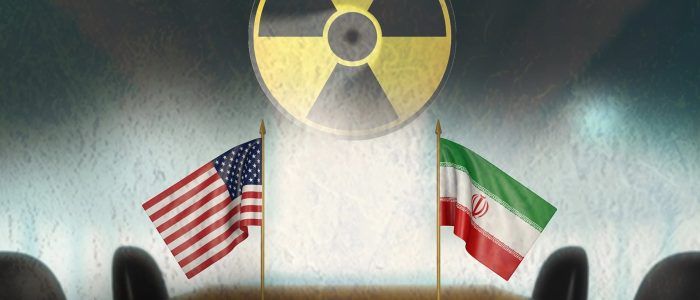
On 2 February 2026, negotiations between Iran and the US were held in Geneva, which mediators described as the most constructive round of talks in years. Rather than repeating entrenched positions, both sides were involved in exploring creative formulations, expecting a principal agreement within days, with a detailed verification mechanism to follow within months. Several US presidents had prioritised negotiations to discuss issues with Iran, including its ballistic missile programme and enrichment of uranium. Democrats supported negotiations as the best alternative to avert a dangerous war, while Republicans considered negotiations a foolish strategy to appease Tehran. Earlier in 2015, President Obama negotiated an agreement, the Joint Comprehensive Plan of Action (JCPOA), with Iran to impose restrictions on its nuclear programme and to keep it one year from being able to make a bomb, in return for relief from the US sanctions.
Iran vowed to refrain from developing weapons as mentioned in the preamble that “Iran reaffirms that under no circumstances will Iran ever seek, develop or acquire any nuclear weapons.” However, President Trump abandoned the Iran nuclear deal in 2018, citing the terms and conditions as inadequate. In recent years, Iran was ready to accept much stricter limits on its uranium processing, with a level far from bomb-grade combustibility. Even Iran showed its willingness to engage on the issue of its ballistic missile programme. But, before Tehran could make such concessions, Israeli strikes on Iran in June sabotaged nuclear talks, which were subsequently supported by the attacks on Iranian nuclear facilities by the US in Fordow, Isfahan, and Natanz on 21 June.
The Trump administration’s maximalist demands and mafioso-like threats tied to unilateral deadlines once again undermined the recent Geneva talks. Tehran had already shown its willingness to make necessary concessions on nuclear enrichment, including shipping out its 60% enriched uranium in response to the Trump administration’s zero enrichment demand, citing a “right to enrich” for civilian nuclear activities under the IAEA safeguards. The Trump administration could have achieved a breakthrough, but the administration’s insistence on regime change in Iran and rolling back the country’s ballistic missile programme derailed efforts for nuclear diplomacy. Iran considered its ballistic missile programme as the last credible pillar of deterrence, urging the US to confine the scope of nuclear talks to the nuclear agreement and sanctions relief.
The sudden US-Israel strike on Iran showed Trump’s duplicity, pretending to negotiate with Tehran while preparing for a surprise decapitating strike. In fact, the US-Israeli surprise attacks are impromptu military aggression at a time when diplomatic efforts were underway to reach a peaceful and negotiated solution. Iran is also a signatory to the Non-Proliferation Treaty (NPT) and the International Atomic Energy Agency (IAEA) system. IAEA Director General, Rafael Mariano Grossi, has also confirmed that no evidence has been found that Iran is building a nuclear weapon. Therefore, such unilateral strikes against a member state of the NPT would not only weaken diplomatic mechanisms but also erode trust and credibility in these institutions. Nuclear diplomacy hinges on mutual trust and predictability. A joint US-Israeli high-profile strike that took out Iran’s senior leadership breaches the very trust that negotiations depend on. Iran would see future negotiations as a trap rather than a genuine effort for peace. Additionally, these strikes reinforce the fact that military force is a legitimate alternative to diplomacy, undermining the premise that non-proliferation disputes are resolvable within legal and diplomatic frameworks. As a result of joint US-Israel aggression, Tehran will not re-engage in nuclear talks, increasing Tehran’s incentive to pursue a nuclear deterrent. In conclusion, the coercive and unilateral actions by the US, grounded in unsubstantiated threat claims and maximalist demands, destroyed negotiating momentum with Iran while diminishing prospects for a nuclear deal in the future.
This article was published in another form at https://cscr.pk/explore/themes/defense-security/how-washington-undermined-nuclear-talks-with-iran/


Ms Nawal Nawaz is Research Assistant at the Center for International Strategic Studies (CISS), Islamabad.