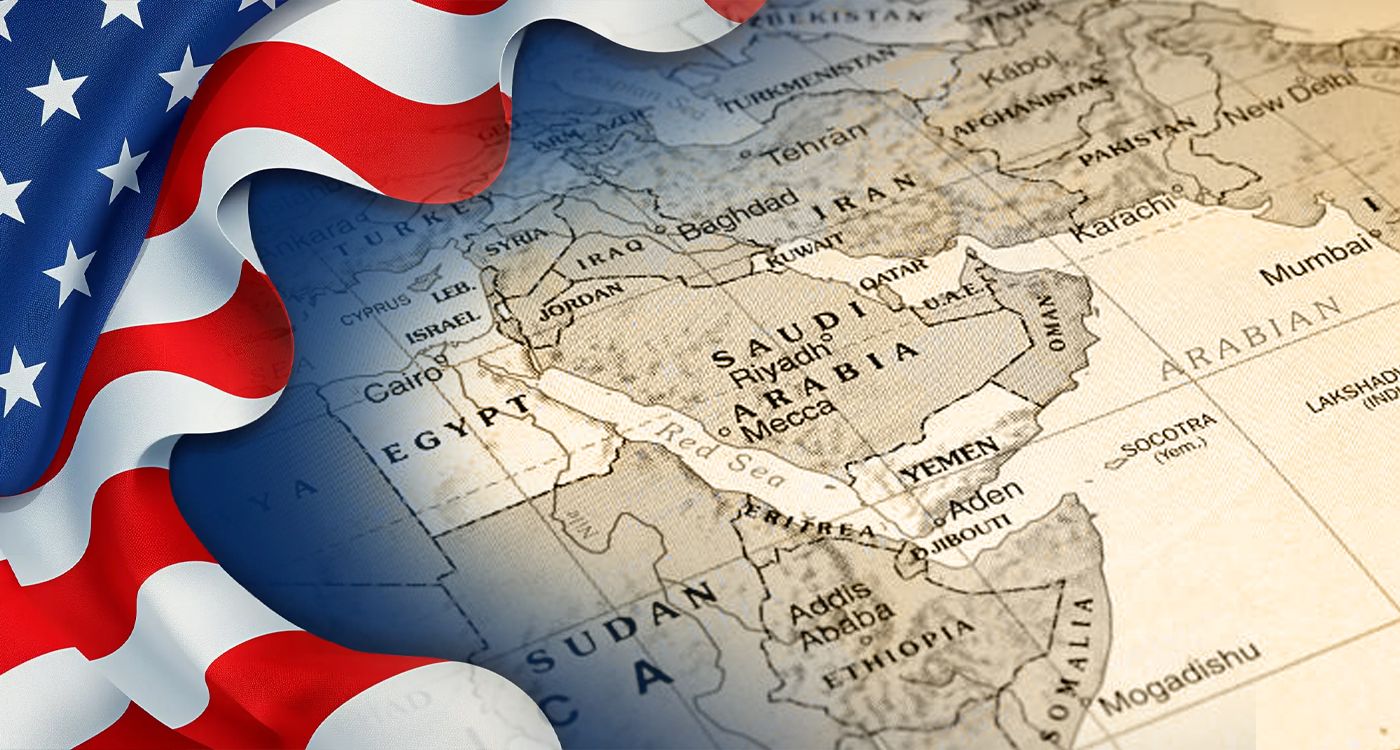
In the ongoing US-Israel-Iran war, mediation efforts are gaining momentum in Islamabad and negotiation terms are reportedly on the table from both sides. However, the central question remains whether the war will continue despite these efforts? Following Operation Midnight Hammer, the United States claimed to have neutralized key Iranian threats. Nevertheless, it joined the Israeli-initiated military strikes which was launched on February 28, 2026. It targeted Iranian elite leadership with the apparent objective of altering the current regime. This involvement reflects long term U.S. national interests and strategic objectives outlined in the National Security Strategy (NSS) 2025. The NSS demonstrates a clear regional prioritization, in which the Middle East remains strategically important. At the same time it emphasizes that the US would avoid prolonged military engagements there, while preventing any regional power from challenging the U.S. hegemony and Israel’s security interests. However, the ongoing war has weakened both adversaries and regional allies alike, raising a critical question as to whether the United States will choose to end the conflict in alignment with its own strategic priorities or not. Increasingly, current realities suggest that the time to de-escalate may have arrived.
In this conflict, many analysts observe that the United States has incurred substantial costs. Their assessment suggests that continuing the war could require up to $200 billion more. Moreover, the United States has failed to effectively protect its allies in the Gulf. It has placed them in a precarious military and economic position. This continuation has pushed U.S. allies toward potential strategic and economic vulnerability. This is significant as the NSS 2025 emphasizes economic resilience and restoration as core US strategic priorities. In contrast, Iran, despite suffering from decades of economic sanctions has demonstrated resilience to prolonged economic pressure. As a result, the relative cost burden on the United States and its allies is becoming a key factor that may compel Washington to reconsider the continuation of the war that is has initiated.
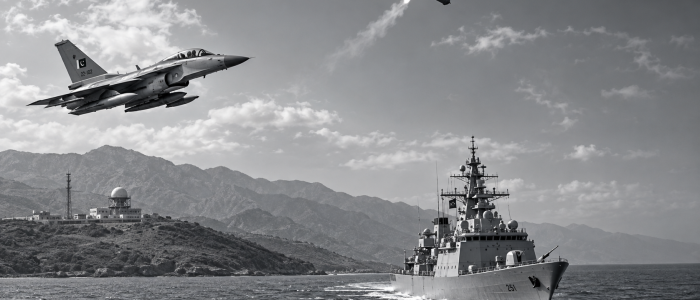
Furthermore, the 2026 National Defense Strategy (NDS) highlights Operation Rough Rider which reportedly degraded Houthi strike capabilities and ultimately secured maritime routes under principle of Freedom of Navigation. Drawing from Alexander Hamilton’s strategic thought, as referenced in the NSS, which says to maintain Free and Open access to global routes, this objective remains central to U.S. strategy. To support this objective, the United States deployed two aircraft carriers i.e. the USS Abraham Lincoln and the USS Gerald R. Ford to the Strait of Hormuz. However, the evolving nature of modern warfare particularly the use of missile and drone capabilities by Iran, has exposed vulnerabilities in U.S. naval deployments. It has forced a partial withdrawal or repositioning of forces. This development suggests that the United States may face increasing difficulty in sustaining its traditional approach to Area Access/ Area Denial (A2/AD), especially when compared to its posture in the Asia-Pacific region.
Another key pillar of the NSS 2025 is energy dominance particularly in oil, and gas acquisition. Similar strategic application has been observed in the U.S. engagement with major energy producer state i.e. Venezuela. In this context, Iran’s vast oil reserves may represent a significant strategic consideration. However, without shift in Iran’s political structure, direct access to these resources remains unlikely. While a rapid strategy aimed at leadership decapitation and regime change may have been expected to acquire it, but Iran’s continued resistance has prolonged the conflict beyond initial expectations.
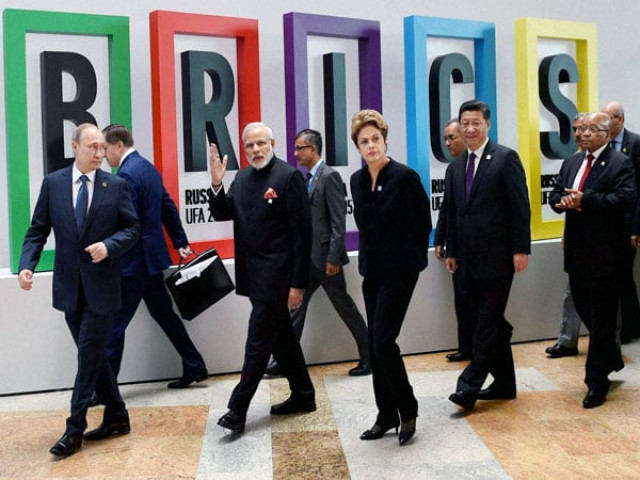
As the war extends over a longer period, it risks undermining the global position of the United States, particularly through challenges to the United States’ petro-dollar system. Iran’s strategy of keeping the Strait of Hormuz accessible to states trading in alternative currencies, such as the Chinese Yuan, could gradually weaken U.S. financial influence. While this may negatively affect U.S. aligned economies, it could benefit emerging blocs such as BRICS, with countries like India potentially gaining strategic advantage.
Given these dynamics, it is increasingly in the strategic interest of the United States to actively support mediation efforts, while maintaining leverage in negotiations. Notably, Washington may have already achieved partial objectives, including weakening of Iran and reshaping of regional power balances. According to some reports, pre-mediation efforts are taking place in Islamabad with Egypt, Turkiye, and Saudi Arabia, where Pakistan is a neutral facilitator. By maintaining its strategic autonomy intact and advocating for regional stability, Pakistan is historically providing a platform for dialogue among key stakeholders. This role not only enhances Pakistan’s historic diplomatic relevance but also demonstrates the importance of middle powers in conflict resolution. Such mediation efforts, even if incremental, contribute to de-escalation and create pathways for sustained diplomatic engagement. Considering the multiple pressures facing the United States including evolving warfare dynamics unexpected conflict prolongation, risks to maritime security in the Strait of Hormuz, economic strain on allies, and the growing influence of alternative power blocs such as BRICS, despite its partial strategic gains, a recalibration of policy appears increasingly likely. Ultimately, the decision to continue or end the war will depend on the United States’ ability to balance strategic objectives with emerging costs and risks. However, beyond strategic calculations, there remains an ethical imperative that the continued use of force in an already fragile region risks further human suffering, instability, and long term geopolitical fragmentation. A shift toward diplomacy and restraint is not only strategically prudent but also morally necessary in shaping a more stable international order.
This article was published in another form at https://defensetalks.com/middle-east-chaos-and-the-united-states-national-strategy/

Mr Muhammad Ali Baig is Research Officer at the Center for International Strategic Studies (CISS), Islamabad.