For decades, though originally a part of the same state, geographic neighbours, Pakistan and Bangladesh nevertheless remained diplomatically distant. The lingering legacy of 1971, deep-rooted political divisions, and India’s regional influence strained Pak-Bangladesh relationship. However, shifting regional dynamics and political transitions have opened the door for a much-needed recalibration of ties. The forced removal of Awami League government was major factor in this change. Reinforcing this shift, former Bangladesh Foreign Affairs Adviser Touhid Hossain stated that there was no longer any justification for strained ties with Pakistan, signaling a growing recognition among Bangladeshi officials of the need to reset historically strained bilateral relations.
Unlike past engagements that have been shaped by historical grievances, the evolving Pakistan-Bangladesh relationship is now increasingly driven by emerging realities. This includes expanding trade exchanges, growing military diplomacy, and high-level diplomatic exchanges, reflecting a growing recognition of mutual economic benefits. China’s economic footprint plays a pivotal role in the shift in the Pakistan-Bangladesh relationship, as it remains the major trading partner for both states. The Belt and Road Initiative (BRI) and the prospective expansion of the China-Pakistan Economic Corridor (CPEC+) offer significant economic incentives that could gradually override past animosities. At the same time, India’s waning regional influence raises and strain in their relationship with Bangladesh which could be a precursor of a new South Asian regional order. If economic imperatives take precedence over political matters, Pakistan and Bangladesh could experience a transformational shift in their bilateral relationship. This, in turn, may reshape South Asia’s regional order, where economic interdependence can replace historical divisions as the primary force driving cooperation and stability.
Political Transition in Bangladesh: A Window of Opportunity
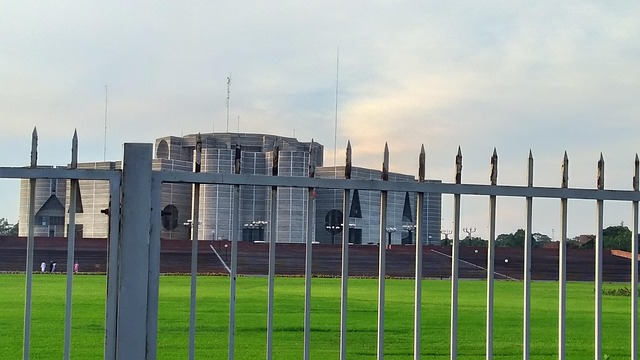
Bangladesh’s changing political landscape is reshaping its foreign policy priorities, signaling a potential shift in regional dynamics. Under Sheikh Hasina’s decade-long leadership, Dhaka aligned itself with New Delhi, creating deep strategic and economic ties with New Delhi, while keeping diplomatic engagement with Pakistan minimal. However, her departure in August 2024, following allegations of election rigging and mass protests, has set the stage for a more independent and diversified foreign policy approach.
Bangladesh’s interim government initiated a more autonomous foreign policy that diversified Dhaka’s external engagements beyond its traditional strategic orientation. This opened new diplomatic channels, including renewed engagement with Pakistan and enhanced cooperation with China. The diplomatic shift became particularly evident in December 2024, when Pakistani Prime Minister Shehbaz Sharif met Bangladesh’s interim Chief Adviser Muhammad Yunus on the sidelines of the Developing-8 Organization for Economic Cooperation Summit in Cairo. Their discussions focused on trade, energy cooperation, and maritime connectivity, marking an important step toward enhancing bilateral relations. A breakthrough followed with the revival of direct cargo shipping between Pakistan and Bangladesh, the first such maritime link since 1971. Pakistani vessels were once again permitted to call at the Port of Chittagong, reducing reliance on indirect shipping routes and facilitating bilateral trade. The normalization process has continued under Bangladesh’s elected government. In 2026, Dhaka sent a delegation of senior civil servants to Pakistan’s Civil Services Academy for executive leadership training, the first structured bureaucratic exchange of its kind in decades, reflecting growing institutional cooperation between the two countries. This also reflects a growing realization that cooperation outweighs historical grievances, paving the way for a more pragmatic and mutually beneficial relationship.
Beyond Trade: The Rise of Military Diplomacy
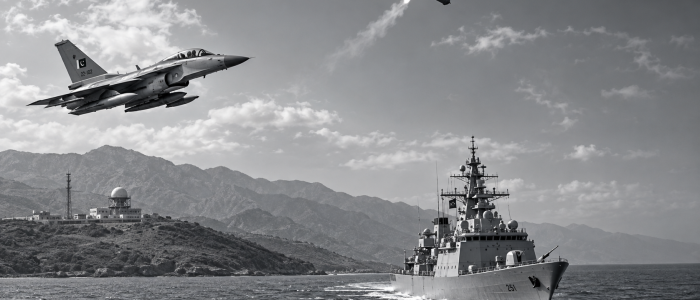
Beyond trade, military diplomacy is also gaining momentum, signaling a broader shift in Pakistan-Bangladesh engagement. In early 2025, a Bangladesh Army delegation visited Pakistan to discuss joint training programs, defense cooperation, and potential military technology transfers, a significant departure from Dhaka’s previous reluctance to engage in security collaboration with Islamabad. Adding to this momentum, reports indicate that Bangladesh is considering acquiring JF-17 Thunder fighter jets, jointly developed by Pakistan and China, as part of its Forces Goal 2030 military modernization plan. If materialized, this deal would diversify Bangladesh’s defense procurement beyond its traditional partners and mark a milestone in defense cooperation. These developments reflect Dhaka’s growing strategic flexibility, reinforcing the notion that economic pragmatism and security interests are gradually overriding historical hesitations in shaping the future of Pakistan-Bangladesh relations.
China and Strengthening Pak-Bangladesh Ties
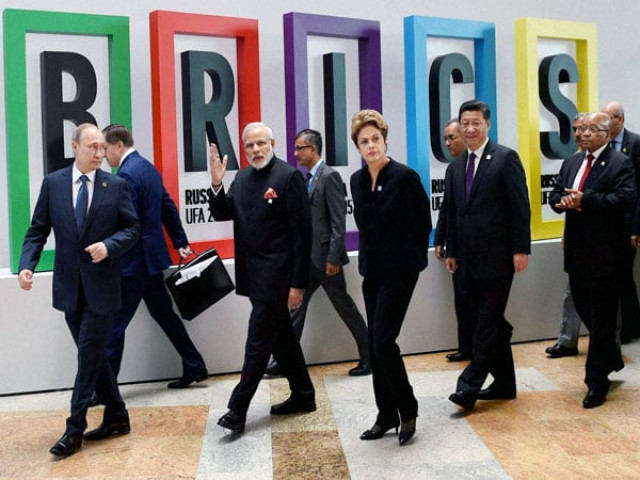
China’s role in shaping Pakistan-Bangladesh relations cannot be ignored. China’s growing economic footprint in South Asia has become a key driver of Pakistan-Bangladesh engagement, promoting regional connectivity and trade integration. As the largest trading partner of both states, Beijing has actively promoted regional economic integration through its Belt and Road Initiative (BRI), reshaping the economic landscape.
Bangladesh’s trade with China surged to about $24 billion in 2023, surpassing its trade volume with India, which stood at $18 billion. China’s extensive infrastructure investments in Bangladesh, including the Padma Bridge, Dhaka Metro Rail, and the Karnaphuli Tunnel, have significantly improved trade efficiency and strengthened Bangladesh’s position as a regional economic hub.
If Dhaka moves closer to Pakistan by joining CPEC+, it could transform regional trade, granting direct access to Central Asia via Gwadar and Karachi ports, significantly reducing dependency on India-centric trade routes. Meanwhile, Pakistan has already benefited from over $65 billion in Chinese investments through CPEC, strengthening maritime trade, industrial zones, and energy security. A formal Bangladesh-Pakistan integration into this framework could reshape South Asia’s trade architecture, creating an alternative regional supply chain that bypasses India’s traditional economic dominance.
For Pakistan, closer economic ties with Bangladesh serve two key objectives: diversifying trade partnerships and reducing India’s strategic influence over Dhaka. As Bangladesh balances its economic engagements while securing long-term trade benefits, China’s strategic role in promoting a Pakistan-Bangladesh economic corridor could redefine the regional power balance.
India’s Waning Influence in South Asia
For years, India has exerted strong influence over Bangladesh, with Sheikh Hasina’s government serving as a key regional ally. However, recent shifts suggest New Delhi’s dominance is fading, as Dhaka actively diversifies its diplomatic and economic engagements. Bangladesh’s deepening trade ties with China and Pakistan indicate a deliberate effort to reduce its reliance on India.
Moreover, India’s hesitation to fully engage in regional trade initiatives, such as the Bangladesh-China-India-Myanmar Economic Corridor (BCIM), has driven Bangladesh to explore alternative economic partnerships. If Dhaka fully integrates into CPEC+ and expands its economic cooperation with Pakistan, it could significantly diminish India’s role in shaping South Asian economic dynamics, marking a potential realignment in South Asia’s economic order.
A Path Forward: Institutionalizing Economic Integration
While Pakistan and Bangladesh engagement is strengthening, its long- term sustainability requires institutional frameworks and confidence building measures. Strengthening cultural exchanges, academic collaborations, and diplomatic initiatives will be important in increasing trust and mutual understanding between the two states. The foundation for this new phase of engagement has already been established through tangible steps that demonstrate growing economic and diplomatic cooperation between Islamabad and Dhaka.
Recent developments signal a new era of cooperation. In February 2025, direct trade resumed for the first time since 1971, with Pakistan’s first government-approved cargo shipment reaching Bangladesh. This was reinforced by a trade agreement finalized for Bangladesh to import 50,000 tons of Pakistani rice, and the establishment of a Joint Business Council to facilitate economic cooperation between the two states.
Beyond trade, education and mobility have also improved. Pakistan has extended 300 fully funded scholarships to Bangladeshi students, while visa restrictions have been eased, making travel between the two states more accessible than ever before. To institutionalize this economic cooperation, both states must formalize trade agreements under regional frameworks like the South Asian Free Trade Area (SAFTA). Reducing tariffs and expanding maritime trade routes beyond Karachi-Chittagong to include Gwadar, Mongla, and other seaports could unlock new trade corridors, enhancing a more integrated and efficient regional economic network. Engagement in SAARC, the D-8, and BRI-related forums will further solidify their economic partnership, while joint energy projects, LNG terminals, and infrastructure development will maximize economic interdependence. The evolving relationship between Pakistan and Bangladesh is a transition from historical alienation to pragmatic cooperation, driven by economic necessity rather than ideology. As China’s role in regional trade expands and India’s traditional dominance faces challenges, Pakistan-Bangladesh economic cooperation could redefine South Asia’s regional economic order. If Islamabad and Dhaka remain committed to prioritizing trade and investment over historical divisions, they have the potential to enhance a more balanced, economically integrated South Asia, where economic pragmatism, rather than political rivalry, shapes the future of regional engagement.
This article was published by Dhaka Opinion Magazine in another form at https://dhakaopinionmagazine.com/2026/07/12/pakistan-bangladesh-relations-from-historical-tensions-to-economic-pragmatism/


Syed Ali Abbas is Research Officer & Comm Officer at the Center for International Strategic Studies (CISS) Islamabad. He is also an MPhil scholar in the Department of Strategic Studies at the National Defense University (NDU) Islamabad.