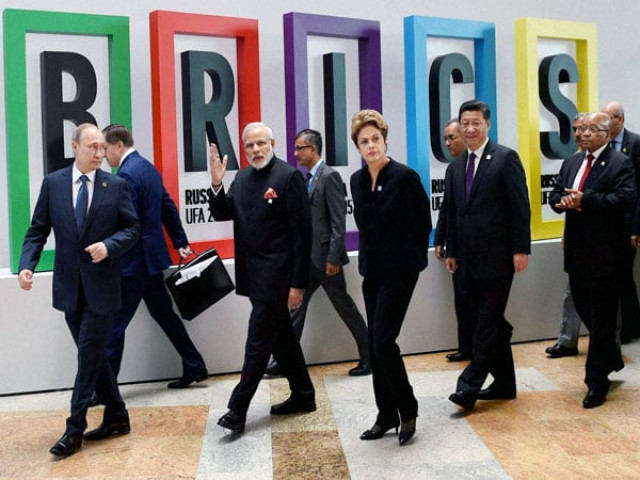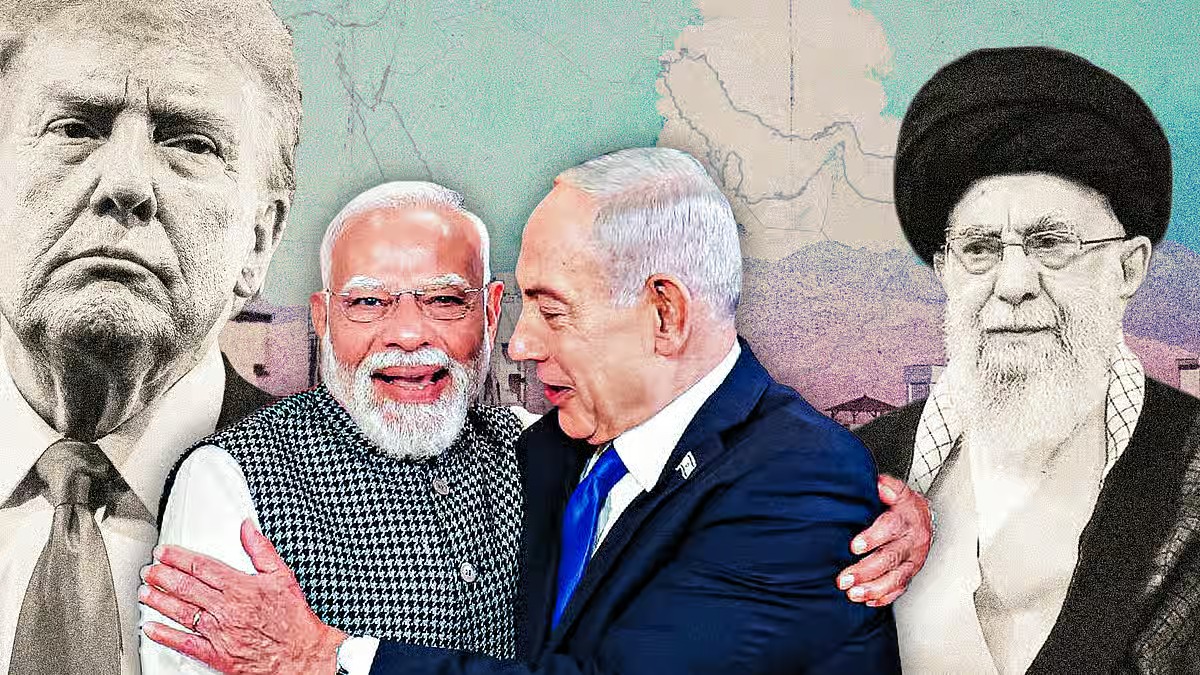
Indian Prime Minister Narendra Modi during a Global Economic Cooperation summit in early February this year claimed that India has emerged as a ‘confident and credible’ voice of the Global South. Yet the recent US-Israel joint war on Iran has exposed the limits of New Delhi’s influence in the Middle East. It not only remained absent from key diplomatic efforts and failed to shape the course of events, it largely appeared more a spectator than a stakeholder. This has raised questions about whether Modi’s claim still holds true.
India has long sought to project itself as a prominent voice of the Global South through its active participation in platforms such as BRICS and the Shanghai Cooperation Organisation. Rooted in its anti-colonial legacy and its prominent leadership role in the Non-Aligned Movement (NAM) under Prime Minister Jawaharlal Nehru, India has often tried to cultivate an image of a state capable of addressing the political and economic grievances of developing nations.
This historical positioning allowed New Delhi to establish a facade of championing a more equitable international order grounded in economic cooperation, strategic autonomy, and opposition to the dominance of Western-led alliances, financial institutions, and geopolitical pressures. However, the war in Iran has exposed this self-image of New Delhi. The contradictions and limitations in India’s foreign policy are nowhere more pronounced than in the Middle East, where India’s claim of serving as a principled and unified voice of the Global South faces growing scrutiny.
For decades, India has steadily expanded its economic, political, and strategic footprint in the Gulf region, positioning itself as a reliable partner to major Arab states. Under Prime Minister Modi, New Delhi intensified this outreach through high-level diplomatic engagements, strategic partnerships, trade and commerce and growing defence and energy cooperation. Modi’s receipt of some of the Gulf’s highest civilian honours reflected the deepening political symbolism attached to these ties, even as India simultaneously sought to preserve its strategic relationship with Iran to safeguard connectivity, energy, and regional interests, while gradually promoting ties with Israel to a ‘Special Strategic Partnership’.
However, against the backdrop of the Iran war, the central challenge confronting India in the Gulf is one of strategic credibility. While New Delhi seeks to portray itself as a balanced and pragmatic actor, its overt political and strategic proximity to Israel, compromise over its long-standing support for Palestinian cause, expressing concerns over Pakistan-Saudi defence pact, rise of Hindu nationalism inside the country leading to marginalization of Indian Muslims, and not condemning the joint US-Israel attacks on Iran, have complicated its image across parts of the Arab world and severely weakened its position in forums like BRICS.
India, the fifth-largest economy, third-largest importer of oil and the second-largest importer of LPG, bore the brunt of the closure of the Strait of Hormuz. Additionally, any likelihood of the return of its expatriates from the Gulf would be devastating for India’s already fragile economy, as the Indian rupee became one of the worst-performing currencies this year.
The emergency can be highlighted by repeated visits of Indian leadership to several Gulf states, notably External Minister Jai Shankar’s visit to the United Arab Emirates (UAE), Petroleum Minister Hardeep Puri’s visit to Qatar, and National Security Advisor Ajit Doval’s visit to the Kingdom of Saudi Arabia, to ensure the energy security India badly seeks.
These competing alignments and inconsistent strategic signals increasingly project India as an opportunistic actor attempting to navigate multiple power centres for immediate geopolitical gains rather than sustaining a coherent long-term regional vision.
Gulf states are becoming increasingly cautious in viewing India as a dependable strategic partner, despite the reality that New Delhi maintains extensive economic interdependence with the region through trade, energy imports, investments, and one of the world’s largest expatriate workforces residing in Arab states.
India tried two competing connectivity visions: the US-backed India-Middle East-Europe Economic (IMEC) corridor and the Iran-linked Chahbahar and International North-South Transport Corridor (INSTC) projects. The Iran war has exposed the fragility of this approach as the future of both visions hangs in the balance.
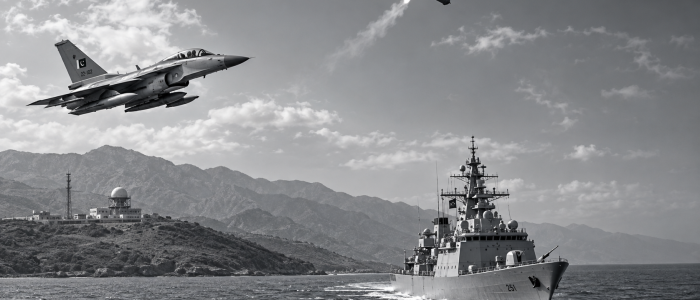
Interestingly, contrary to expectations of the Modi government, Pakistan emerged as an active and responsible diplomatic actor during the Iran war, sidelining New Delhi’s efforts to isolate Pakistan. While Washington, like in the Asia Pacific, overestimated India’s willingness to shoulder regional security responsibilities, India failed in its diplomatic engagement and displayed a sheer lack of coherent Middle East strategy to end the conflict.
The Middle East conflict, on one hand, highlights that Islamabad’s longstanding military ties with its Gulf partners remain important, as shown by the signing of Saudi-Pakistan Strategic Mutual Defence Agreement SMDA, with other Gulf states also showing keen interest in joining similar pacts with Islamabad. On the other hand, it points out the growing role of China in the Middle Eastern affairs as numerous Gulf states have deepened defense and maritime ties with China, further diminishing India’s position in the region. This is also due to declining trust in Washington’s security umbrella and distrust over American pledges to aid the Gulf in a future crisis. In a nutshell, New Delhi’s balancing strategy between Western partnerships and Global South leadership increasingly appears opportunistic rather than principled. This diplomatic pretense has, therefore, eroded the moral and political legitimacy it once tried to derive from its anti-colonialism, non-alignment, and strategic autonomy narratives.
This article was published by Islamabad Policy Institute (IPI) in another form at https://ipi.org.pk/how-the-iran-war-exposed-indias-credibility-crisis/


Mr Mobeen Jafar Mir is Research Officer at the Center for International Strategic Studies (CISS), Islamabad.