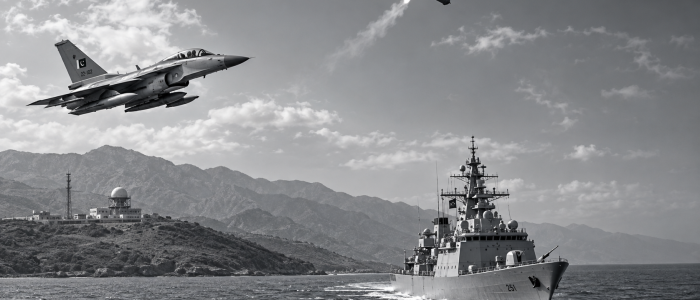
Pakistan-India’s crises, since 1998, demonstrate compelling evidence that nuclear weapons have not prevented small scale conflicts in South Asia. Most importantly, the May 2025 crisis evolved into the most serious military standoff since the 1971 war, in which for the first time, both countries exchanged missile strikes against each other’s counterforce targets across the international borders. Each subsequent crisis has maintained a progressively precarious limit than the previous ones. It demonstrates an unstable deterrence equilibrium incapable of self-managing and depicts a growing pattern of escalation in which each crisis extends the limits of what both sides conceive as militarily and politically rational. Considering the 2019 Balakot crisis and then followed by the May 2025 episode, the trajectory of these escalations has been carried out by India who initiated each round of military action against Pakistan.
India has deployed approximately 80 percent of its offensive military capability toward Pakistan, regardless of the development along the Sino-Indian border. India has acquired robust military capabilities touted as addressing the security challenges from China, but each one has been deployed against Pakistan. India’s two front security posture has not guided by bilateral arms control, but it has continued to modernize and grow its conventional and nuclear equipment, directed at Pakistan. In South Asia, there is no existing space for the limited conventional war under the nuclear overhang. Pakistan’s declared first-use nuclear policy illustrates that because of its lower strategic dept, it cannot absorb a prolong conventional attacks, and therefore it may go for the nuclear option if its survival becomes threatened. From this perspective, local arms limitation is an essential arrangement to ensure that Pakistan would never be compelled into such a strategic dilemma.
My sense is that a mutual restraint regime should be established on the three fundamental and mutually reinforcing pillars. First, both Pakistan and India should create a formal and pre-notified cap on troop numbers, military deployment, and the magnitude of military exercises along the Line of Control and the international border. Similarly, the DGMO hotline, established in 1971, but they are not properly operational during the crisis as expected, should be emboldened and integrated into the Nuclear Risk Reduction Center (NRRC). It should be capable of working permanently both prior and during the crisis. Third, both countries should utilize the traditional multilateral platforms, notably the SCO for a sideline meeting to resume structural military dialogue.
Forth, both states need to establish or reestablish expert level track 2 dialogue to discuss doctrines and the role of emerging technologies. Such arrangements would gradually minimize the risk of misunderstanding and misperception and would probably lead to official level discussion and provide a foundation for other steps toward formal arms control. Establishing an official level dialogue is a heavy initiative to take immediately but track 2.0 could build trust and smoothen the pathway for the track 1.5 and 1.0 dialogue.
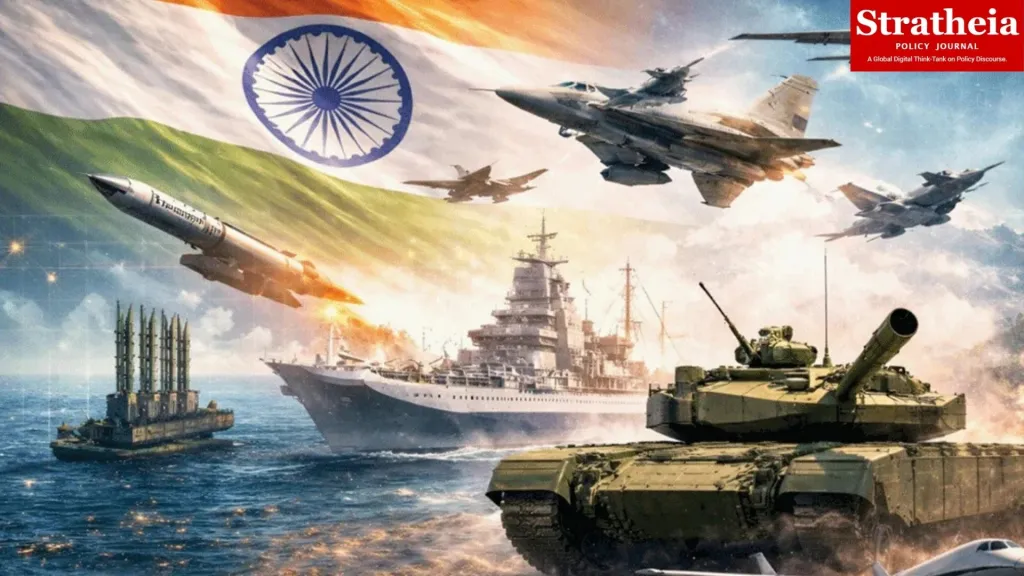
However, the prospect of arms control in South Asia is quite low. India is taking ahead of Pakistan in both conventional and nuclear arsenals. It is India who sets the ground for arms race in either domain. This has led to an increasingly hostile geopolitical environment in South Asia. Similarly, India is also modernizing its nuclear weapons and missiles systems. According to the Stockholm International Peace Research Institute (SIPRI), India’s nuclear stock outpaced Pakistan in 2024. Moreover, considering its sea-based deterrence efforts, India has deployed three SSBNs in the Indian Ocean that’s prevail the perception that it may have mated a few nuclear warheads with their launchers. Likewise, the integration of AI and cyber technology with nuclear domain is likely to undermine the strategic stability in South Asia. The deterrence in South Asia has weakened due to India’s growing conventional, nuclear, maritime, and technological modernization. Its behavior from Kargil conflict in 1999 to May 2025 stand-off has consistently demonstrated India’s perception of conventional campaign as a rational choice under the nuclear overhang. Consequently, it has eroded strategic stability by expanding the gap between the emerging capabilities and the regulatory mechanism designed to check them. South Asia is the world’s highly sensitive nuclear flash point, bearing no space for error and adventurism. May 2025 crisis aptly revealed that South Asian strategic stability has become victim to India’s irresponsible and reckless attitude. With this kind of insanity by India coupled with lack of renewed dialogues and regional arms control mechanism, the future of regional stability is precarious with recurrent confrontations.
This article was published by the Stratheia in another form at https://stratheia.com/beyond-deterrence-the-case-for-arms-control-in-south-asia/


Mr Murad Ali is a Research Officer at Center for International Strategic Studies (CISS), Islamabad