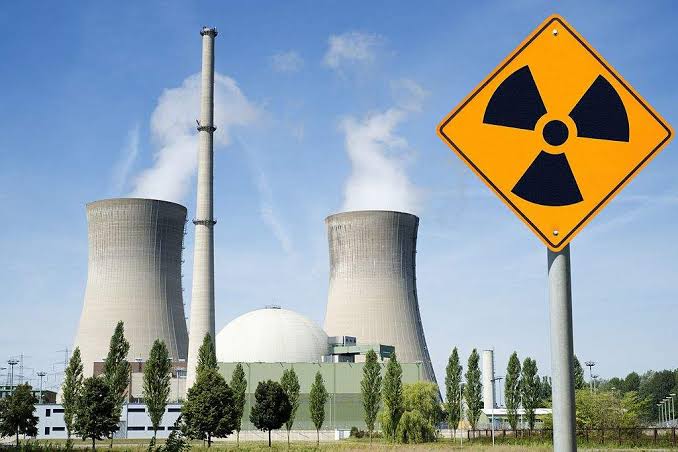
In July 2026, the ransomware group World Leaks published around 19,000 files from a collection of documents related to the Kudankulam Nuclear Power Plant (KKNPP) in India. It is the country’s biggest nuclear power plant. The leaked documents reportedly included engineering drawings, supplier data, inspection records, and internal documents from 2016 through 2025. This is the case of cyberspace where cyber-attacks add to the uncertainty of attribution, intent and thresholds of escalation. Such uncertainties can lead to misjudgment and a disproportionate military response, particularly if there is simultaneous conventional military crisis development.
A prism to analyze this case study is the linking up of conventional strategic nuclear risk. Here, overlapping physical infrastructure, data pipelines, software, vendors, and cloud services rely on both conventional and nuclear command, communication, and support. An attack against a non-nuclear or commercial network may therefore be of nuclear interest if it impacts nuclear infrastructure facilities, information or support. This is possible even if the attacker/ hacker is not interested in escalating a crisis.
The attribution dilemma also leads to legal and strategic uncertainty. The difficulty in cyberspace to establish who is behind an operation, what it was for, and whether the event was an espionage, a criminal extortion, a sabotage or a state-directed coercion. This opacity increases the chances of unintended escalation, particularly if kinetic, informational, or electronic-warfare aspects are integrated into hybrid operations. It also reiterates the importance of establishing more precise legal limits and risk management measures that can safeguard civilians and critical infrastructure in societies that are highly digitalized.
The Kudankulam case raises an important aspect about the cyber-nuclear nexus security threats i.e. a cyber-attack doesn’t have to get into the command and control systems of a nuclear plant to have strategic relevance. This was not an issue with the plant’s operational technology or reactor-control systems, but rather a server that was managed by a contractor that lacked sufficient cybersecurity measures. If nuclear-adjacent facilities use commercial cloud services, contractor networks, supplier ecosystems, and information-technology infrastructure with normal civilian industry, a break in that ecosystem can find its way to nuclear relevance. This is more of an infrastructure-governance issue. It is also a supply-chain-security issue rather than any act of nuclear escalation by any specific actor.
From this cyber-nuclear entanglement, there are two lines of risks. First, there is the threat of symbolic escalation due to cyber-attack. The disclosure of a breach at a publicly known “nuclear” location could be seen by its own citizens rather than its adversary as more significant than the content of the incident itself. This can put domestic political pressure on a response (for gaining political sympathy for elections, false flag operation against Pakistan etc.) even if the exposure is only administrative or engineering information. This risk can be exacerbated by media framing. Tackling a hacking incident at a nuclear plant, rather than a cloud server hack, could influence initial perceptions among officials and the general public, even before facts of the hacking incident are known. Second, there is the attack-surface risk. A contractor/vendor system may be less secure, and less continuously monitored, than the facility’s main systems. They can thus offer plausible scenarios for future intrusions that could have more significant consequences. The security of sensitive information, risk management, defence in depth, supply-chain security, incident response, and security responsibilities for third-party parties are emphasized in IAEA guidance on computer security at nuclear facilities, not just the operator. The central issue brought up by Kudalkulam is thus whether the issue is a failure of existing norms or a failure to apply otherwise satisfactory security norms.
Meanwhile, a strict assessment of cyber-nuclear alarmists should not be avoided. Breaching nuclear-adjacent facilities may lead to nuclear alert level escalation. South Asia, where there are no strategic-restraint mechanisms, diplomatic channels and military communication arrangements which can prevent escalation. one cannot hold to the cold war history examples to avoid military crisis. The 1983 Able Archer exercise and the incident involving Stanislav Petrov’s response to a false warning are used to illustrate how judgment, verification and institutional restraint can avoid reflexive escalation even when time is of the essence.
The analytical task that is relevant is thus to balance the cyber-nuclear entanglement thesis with the strategic-restraint mechanisms’ resilience. Ambiguity is not enough just by showing what shared infrastructure can. A convincing argument should highlight the change today such as AI-powered faster decision cycles, automated initial assessment of incidents, the reduced ability to verify, or cyber interference on communication and early-warning systems. The changes may result in more serious future incidents than previous crises in which people had more time and information to make decisions. To sum up, the Kudankulam breach is a worrying example of the structural conditions for cyber-nuclear entanglements in South Asia. It reflects how nuclear-adjacent facilities could be vulnerable due to standard commercial infrastructure, contractors, and shared digital ecosystems. It’s not the incident itself that constitutes an imminent nuclear crisis, it’s the line between conventional cyber risk and nuclear risk which is closing by design. The Indian government should exercise maximum care and security in ensuring the prevention of such lapses.
This article was published by the Islamabad Policy Institute (IPI) in another form at https://ipi.org.pk/the-risk-of-cyber-nuclear-escalation-the-kudankulam-breach/

Mr Muhammad Ali Baig is Research Officer at the Center for International Strategic Studies (CISS), Islamabad.