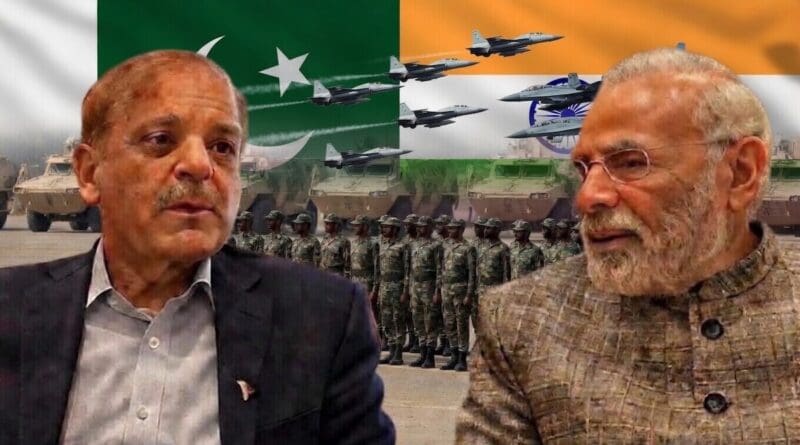
The next India-Pakistan crisis might not begin with a missile, but with a video that never happened. AI can now generate realistic videos, images and audio within minutes. In a nuclearized region, marked by crises, it’s not just a change of technology; it can have implications on how crises emerge and escalate in South Asia. There is no longer a communication problem with AI-generated deepfakes. They are emerging as a risk factor in their own right.
The prospect of this is not the only serious risk that can be created by this development. Time compression is a bigger worry. AI makes it easier and quicker to create and spread false content; it is for governments and fact-checkers to check. In May 2025, India and Pakistan faced a crisis, and while there was a lot of misinformation, it was still possible to take time to verify and issue an official response, as much of it was still created and disseminated by humans. With the advent of generative AI, the pace of innovation has accelerated, and now it’s possible to generate highly realistic text, images, audio and video in minutes and at scale, creating a much shorter timeframe to separate fact from fiction. This makes institutional verification systems have a hard time catching up with the AI-generated information flow. This increasing gap between the pace of synthetic content production and institutional response is even more problematic during times of military tension, when slow verification can lead to confusion, public panic, and potential unintended escalation.
This was the new reality that was borne out of the May 2025 India–Pakistan crisis. In addition to actual footage, social media was filled with “recycled” footage of the battle, false claims and misleading images that were made up as if they were current events. These events illustrated how easily false information can take over the information environment during a crisis, and how difficult it could be to separate facts from false information for the public and the media.
This is where deepfakes really change the rules of the game in a crisis. AI-generated deepfakes are more lifelike than traditional misinformation, and can replicate uses of military leaders, battlefield events and government announcements. They can have an impact on public opinion, even if they are later exposed as false, and can lead to additional political pressures and military signalling problems during a crisis. In response to these risks, India has introduced a proposal for stand-alone legislation against digital misdemeanours including deepfakes powered by AI. The move points to the growing recognition that synthetic media is no longer simply a cybercrime concern, but it’s a national security concern as well.
These are especially acute in the context of Pakistan’s security, where the crisis communication arrangements are not oriented towards AI-based information warfare. The problem is that it’s not official information that reaches people last, but false information disseminated through social media. In this context, it doesn’t matter whether or not a good deepfake is widely believed to be dangerous; it merely matters that it is spread enough to influence initial reactions, framing in the media or political pressures. In other words, the Inter-Services Public Relations (ISPR) of Pakistan is under pressure from the public and media in crisis situations to act quickly in the event of spreading any misinformation through social media. However, official responses are often issued after the false narrative has “already been” in effect and thus can be advanced with a much larger audience. This highlights the need for establishing a real-time digital verification and response cell in Pakistan for the cyber command to more effectively detect, debunk and rebut misinformation generated by AI.
This risk is reflected in recent incidents. In 2026, AI-generated videos falsely showed senior military officials making statements on sensitive regional issues. Although they were later debunked, the videos demonstrated how quickly manipulated content can influence public perception and complicate crisis management before verification is possible.
This is not a South Asia-only phenomenon. During the Iran conflict, images and videos were rapidly shared on social media platforms, frequently altering public opinion even before official information was available and often using AI to generate videos and images. These cases illustrate a trend that is becoming more common: today’s conflicts take place in an environment of faster visibility than verification.
But South Asia is particularly vulnerable because of its long history of military crises between two nuclear-armed neighbours. Crisis management is challenging enough during times of increased tension and uncertainty, let alone in times of political or military pressure and signalling. AI-powered deepfakes in these contexts can raise the potential for miscalculation, potentially by causing confusion about military operations or official statements. The misinformation that ensues can help to escalate even if it is later corrected.
The real problem is that the notion of deterrence is based on the rational understanding of signals. That’s what deepfakes are challenging. Even the most believable deterrent messaging can be undermined by signals that can be fabricated to cast doubt, delay or misinterpretation. Strategic stability is thus no longer just a question of capability or intent but now also involves the question of the ability to verify information during a crisis.
Regulation alone will not solve this challenge. Social media sites need to build quicker detection systems, on pace with generative AI. There is a need for more rigorous verification procedures for security-sensitive content, particularly during crises for news organisations. First, states need to invest in real-time authentication capability – the ability to either confirm or challenge synthetic content within a matter of minutes, rather than hours.
This also requires Pakistan and the region as a whole to change their way of thinking. Information security cannot and should not be viewed as a second-order cyber issue. It is increasingly coming to be an integral part of crisis stability. Even well-managed crises can be upset by technically accurate but operationally effective stories, without credible and quick verification mechanisms.
It is also crucial to have dialogue at the regional level. Preexisting efforts to build trust were developed to address traditional military threats, rather than those stemming from the presence of AI and information manipulation. These frameworks can be updated to incorporate digital verification cooperation, communications during crisis situations and common protocols for synthetic media identification, which would help to mitigate the risk of a potential unplanned escalation. Artificial Intelligence is changing the way information is disseminated and is also influencing decision-making processes for governments in case of crisis. The next India–Pakistan crisis could be not just on the battlefield but on social media as well. It’s no longer optional; it’s a necessity to prepare for that reality or risk the loss of strategic equilibrium.
This article was published by the Eurasia Review in another form at https://www.eurasiareview.com/18082026-ai-deepfakes-and-strategic-stability-is-south-asia-ready-for-the-next-information-war-oped/

Shahwana Binte Sohail is is Research Assistant at the Centre for International Strategic Studies Islamabad.