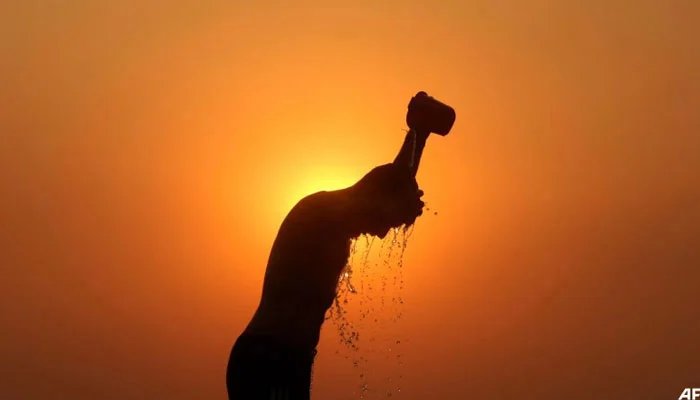
Entire European continent is witnessing a record-breaking heat wave, causing number of deaths. According to World Health Organization (WHO), Europe’s heatwave has caused over 1,300 deaths and these deaths are directly linked with increasing temperature across the continent. WHO further stated that, Europe has become the fastest-warming continent on Earth, heating at twice the global average. The sudden temperature rise in the region—which is accelerating at a scary pace—has re-positioned nuclear energy as an important energy alternative. The 2015 Paris Agreement has identified nuclear power as an important energy source to meet global warming mitigation target. But the Europe is not the only region suffering from global temperature rise. The latest estimates suggest that entire planet earth is accumulating heat at massive scale, worsening Earth’s energy imbalance. This scenario leads us to an important question; Is the nuclear energy answer to the climate change?
The global efforts towards the net-zero emissions have increased the need for reliable and environmental friendly electricity. While renewable energy sources such as wind, solar and hydro will continue to play an important role, modern energy structure require a stable and reliable power sources that can function irrespective of weather conditions. Global energy transition towards climate-friendly alternative has accelerated recently due to the increasing demand for new energy generating capacity around the globe, both to switch from old fossil fuel plants, especially coal-power plants, which emit huge amount of CO2. Global greenhouse gas (GHG) emissions are continuing to increase, mostly as a result of the excessive use of fossil fuels. As per latest estimates, fossil fuels, i.e., Oil, gas and coal, account for almost 80% of all energy consumption globally. It means, fossil fuel still meets almost four-fifths of the world’s energy needs but also has a share of 60% of global GHG emission.
While Europe’s climate crisis is a recent phenomenon, South Asia, one of the poorest regions, also faces tremendous challenges in terms of climate change. It is the most vulnerable regions to climate shocks. As per world bank reports, the region is experiencing a “new climate normal” in which intensifying floods, heat waves, and droughts have become more frequent. In South Asia, Pakistan’s climate crisis is unique. Pakistan consistently remains atop among the countries most vulnerable to climate change, and many of its densely populated cities are considered to be the most polluted cities in the world. Interestingly, Pakistan contributes only 1% to the global GHG emissions. World bank also estimates that Pakistan’s climate related events such as environmental degradation, and air pollution, may cause Pakistan’s GDP to shrink by 18-20% by 2050.
Since Pakistan’s reliance on fossil fuels to meet its energy demands further contributes to worsening climate crisis in the country, nuclear energy can play an important role in mitigating Pakistan’s climate vulnerability. Pakistan shares a long history of cooperation with International Atomic Energy Agency (IAEA), in peaceful application of nuclear technology and nuclear energy is one of the areas where Pakistan has a symbiotic relationship with the nuclear watchdog. Since nuclear energy is the low-carbon, environmental-friendly energy source, Pakistan has long realized that investing in nuclear energy can ensure its energy security, reduce GHGs, and reduce its dependency on costly imported fossil fuels. According to PAEC, from 1970s to onwards, nuclear power plants have generated around 200 billion units carbon free electricity, avoiding more than 122 million tons of CO2 equivalent GHG emissions. This quantity of GHG emission is equal to burning around 51 million tons of coal. This signifies the crucial role of nuclear energy in the development of a sustainable and clean power generation in Pakistan. In order to meet the future energy needs, Pakistan, under its “Pakistan in the 21st Century: Vision 2030”, has outlined a promising energy security plan. This plan sets a target of 162,000 MW sustainable and environmental-friendly power generation by 2030. This vision demonstrates Pakistan’s capability and commitment to harness the benefits of nuclear technology for peaceful purposes. The IAEA’s recognition of Pakistan’s peaceful nuclear program for its adherence to the global safety and security standards, technological advancement, and responsible use of nuclear technology validates its institutionalized command structure and its ambition to become a reliable international partner in peaceful nuclear application. Today, nuclear energy is becoming an essential component of global energy security landscape. In the wake of climate crisis, nuclear renaissance has become real. Many countries from Europe to Asia, are expanding their nuclear power generation capacities. In 1954, Obninsk Nuclear Power Station in Russia (then USSR) was the first nuclear plant to connect with national grid. Humankind, for the first time witnessed, the peaceful application of nuclear technology after the bombing of Hiroshima and Nagasaki. Today, there are over 440 operational nuclear power plants across more than 30 countries. The salience of nuclear energy is increasing day by day. It is, therefore, the responsibility of developed world, particularly the Nuclear Suppliers Group (NSG) member states, to extend nuclear cooperation to the climate-hit countries like Pakistan. Keeping contemporary climate-induced crisis in consideration, global nuclear order, which is based on decades old discriminatory practices, needs a revisit. Then, it will pave a way forward for countries like Pakistan to fight climate change with nuclear technology.
This article was published by The News in another form at https://www.thenews.pk/print/1429014-climate-change-and-a-new-nuclear-order

Mr Yasir Hussain is Associate Director Research at the Center for International Strategic Studies (CISS), Islamabad and is currently placed at CISS-KIU Research Center, Karakorum International University (KIU), Gilgit-Baltistan, Gilgit.