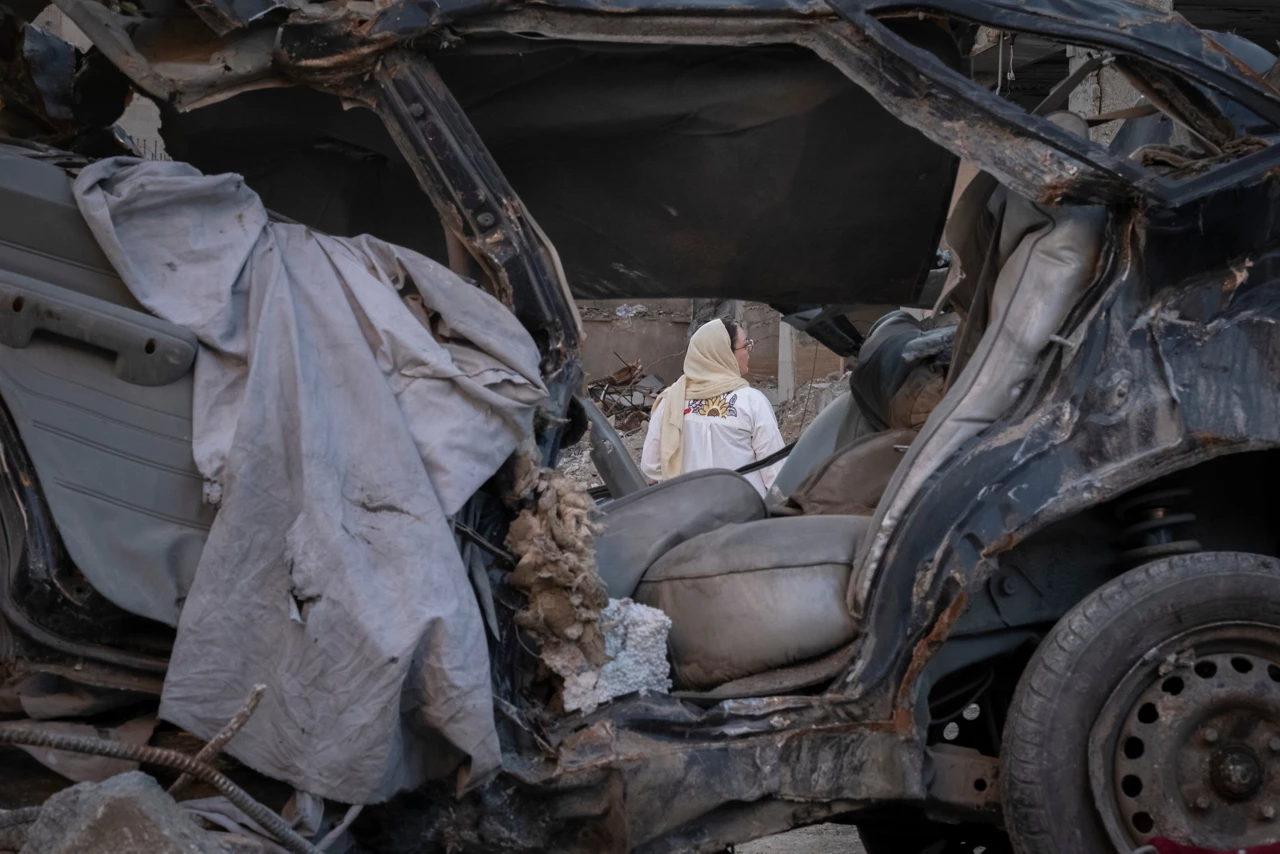
The interaction between conventional targeting of chemical infrastructure and toxic industrial releases exposes a regulatory gap at the intersection of the CWC and IHL. The Israeli attack on Iranian petrochemical and energy infrastructure has been widely covered for its politico-military aspects. However, a significant dimension has been overlooked. The attacks on oil depots and refineries release an enormous amount of chemicals into the air. The released toxic chemicals, including nitrogen oxides, sulfur compounds, and other harmful substances, disperse across populated areas. Recent reports about widespread smoke raise concerns and pose a difficult legal and policy question. Although the prodigious Chemical Weapons Convention (CWC) prohibits chemical warfare, it remains silent on the chemical releases caused by the conventional strikes. This analysis proposes a closer scrutiny of the global chemical nonproliferation regime to address this legal oversight.
The CWC holds the merit of being the most comprehensive disarmament treaty in effect today. The Organization for the Prohibition of Chemical Weapons (OPCW) is responsible for its implementation and is nearly universally adhered to. Its obligation is centered on preventing the development, production, acquisition, stockpiling, as well as the use of chemical weapons and their precursors. The treaty functions through the general-purpose principle, which keeps the chemical control lists dynamic. By keeping the schedules intentionally broad, the treaty aims to keep pace with the scientific chemical advancements.
As the CWC deals with the direct chemical weapon activity, it is notably silent on strikes on petrochemical sites. The convention enforces compliance through verification and inspection, but overlooks the security of chemical infrastructure during an armed conflict. This oversight leaves those large-scale repositories of hazardous chemicals vulnerable to conventional attacks. As a result, the toxic agents are dispersed in uncontrolled ways. Besides the severe health implications, this exposure disrupts the temperature and delays the fire douse, thereby slowing the emergency response.
The problematic part of the CWC is its redundant criteria for determining a chemical attack, where ‘intent’ serves as the guiding principle. The CWC prohibits the use of toxic chemicals as a method of war due to their hazardous fallout. However, to determine a chemical attack and ascertain its legal implications, a weapon has to meet the criteria of a ‘chemical weapon.’ Article II of the CWC recognizes a chemical agent as a chemical weapon when its ‘intention’ or purpose is what is prohibited under the CWC. In practice, when military command selects an energy infrastructure, they anticipate the toxic emissions. The question arises upon the criteria of ‘intent’ when a foreseeability of harmful chemical effects is certain. Foreseeable toxic release may not violate the CWC, but could still implicate IHL obligations regarding excessive civilian harm. The policy silence by CWC results in a means versus effect problem. While focusing only on the use of chemical weapons as a means and ignoring the chemical effect caused by a conventional strike manifests a policy gap. Practically, civilians suffer from the toxic plumes caused by the burning of chemical facilities, similar to the outcome of a chemical weapon attack. Despite those practical realities, the legal classification by CWC rests upon the delivery system. This legal conundrum makes the implementation of CWC uncertain.
This oversight carries serious implications for chemical nonproliferation. CWC has a standard of shared norms visible through its universal adherence. Whereas, this stigma has the potential to divide the states on whether such scenarios should be classified as a chemical attack, and if not, then how should such a hazardous chemical fallout be dealt with. In turn, this confusion incentivizes attacks on chemical hubs and harm civilians, as it does not involve any formal violation of the CWC. Attacks on and nearby chemical facilities is evident during Russia-Ukraine war as well as during Syrian civil war some years ago without any legal consequences. This sets a dangerous precedent and a threat to the global chemical security.
The address does not necessarily demand a total rewriting of the CWC. The existing framework maybe urgently refined to mitigate the indirect release of chemicals. States must prioritize transparency at high-risk industrial sites and rigorously observe safeguards and restraints. Immediate, sustained dialogues among state parties are imperative to reach a shared understanding, ensuring that future incidents are more effectively prevented and addressed. These discussions can also build an empirical basis for adequate risk assessment of chemical incidents in conflict zones.
For the global chemistry community, now is the moment to take decisive action. A comprehensive analysis of toxic agent behavior during fires caused by attacks on chemical facilities is crucial. Such research must directly inform effective model dispersion patterns and accurate calculation of chemical exposure levels. It requires mobilization of chemical industry professionals to actively highlight the ethical and normative dimensions of modern warfare and press for stronger safeguards against industrial chemical risks in conflict. The Iran-Israel war has drawn attention to the global chemical nonproliferation towards a key aspect. The modern conflicts are setting a dangerous trend of capitalizing on industrial chemical threats to attain a political-military edge. Although the CWC has served the nonproliferation regime well, it requires reconsideration. It is high time to address the indirect forms of chemical warfare and clarify policy. With the help of deliberations on scientific and normative debates, the global scientific community can directly be involved in shaping the convention. A careful legal interpretation and practical policy steps can aid CWC to adapt to the emerging patterns of modern warfare and mitigate anticipatory chemical threats.
This article was published in another form at https://cen.acs.org/policy/chemical-weapons/Opinion-Middle-East-hostilities-expose/104/web/2026/04

Ms Anam Murad Khan is Research Assistant at the Center for International Strategic Studies (CISS), Islamabad.