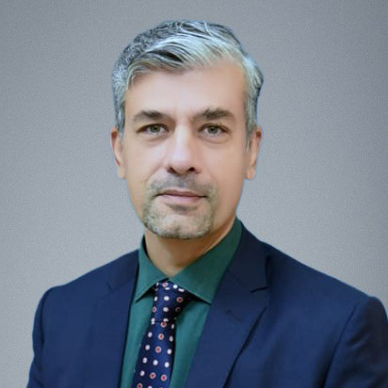
by Riaz Khokhar.... Pakistan has been trying to counter the extremist narrative and foster progressive mindset through NAP, and other non-kinetic means. John Bolton assumed office as a new National Security Adviser of the Trump administration on April 9, 2018. Since his name resurfaced after fifteen years, a number of articles has been written that
Browsing: Articles
by Saima Aman Sial.... As the 50th anniversary of the treaty for the nonproliferation of nuclear weapons approaches in 2020, the global nuclear order is more divisive and challenging. These challenges include continued nuclear testing by North Korea, threatening a nuclear confrontation against the United States and its East Asian allies as well as US
by Afeera Firdous.... A special report on cyber security norms by Stockholm International Peace Research Institute (SIPRI) concluded that many engineered systems, around the world, which depend on digital-computational parts can be ‘hacked’. The states have been trying to deal with such vulnerabilities for many years and the development of protection is known as information-systems
by Samran Ali.... The Chinese Vice Foreign Minister, Li Baodong, speaking at Tashkent Peace Conference on Afghanistan, extended China’s support to the inclusive political reconciliation process in Afghanistan. He said China saw Afghanistan as an important partner under its Belt and Road Initiative (BRI) project. Although limited in the past, the Chinese interest in Afghanistan
Terror outfits often expand their influence by merging into other groups or by cobbling together alliances. They essentially do it when their existence is threatened or for consolidation of power in an alien territory. It helps them to expand their scope, scale of operations, and influence. Moreover, it also helps them to foster human resource,
by Samran Ali.... India is accelerating induction of advanced weapon systems and platforms putting the South Asian strategic stability in danger. These developments include the Ballistic Missile Defence system. According to Defence Research and Development Organisation chief V.K. Saraswat, BMD system was ready to be deployed for two cities namely New Delhi and Mumbai on
by Afeera Firdous.... In the contemporary world, violent extremism has surfaced as a serious national issue. Pakistan is one of those countries which are severely affected by it. As a complex phenomenon, it is visible in Pakistan’s social fabric in the form of extreme views held by individuals, sectarianism and terrorism. Violent extremism is a
by Huma Rehman.... A signalling between hostile states can be useful to both the sender and receiver of the messages; if the signals are properly conveyed, they can reduce the likelihood of tensions by suggesting and alarming, ahead of time, that how to avert the chance of military action. Poorly sent signals, however, can be
The central theme behind the China-Pakistan Economic Corridor (CPEC) is to open new economic and trade avenues that would lead to the overall social and economic prosperity of the region. The fruit of this economic cooperation is a market far larger in scope than the one that exists because of economic conflict in the region.
by Samran Ali.... The US Government has again blamed Pakistan for providing safe havens to the Afghan Taliban and Haqqani Network and suspended financial assistance to Pakistan till Pakistan takes what the US considers decisive action against the militant groups. The Afghan authorities also voiced their suspicions that Haqqanis are hiding in Pakistan. After the