
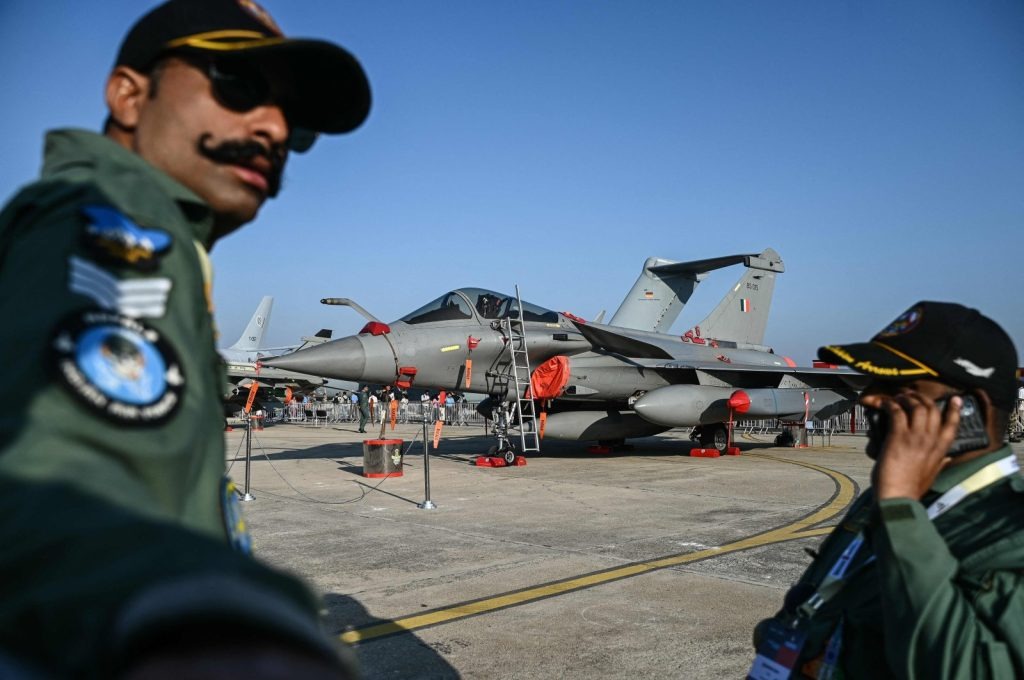
On 27 February 2019, the Indian Air Force (IAF) engaged in an air battle with Pakistan, resulting in the loss of several aircraft. The IAF was outmanoeuvred during the air battle, as it was unable to anticipate the magnitude and accuracy of the response by the Pakistan Air Force (PAF). The Indian leadership acknowledged the lack of operational capability and the absence of modern aircraft. A week later, Prime Minister Modi said that “the nation has felt the absence of Rafale; if we had it, the outcome would have been different”. In 2020, in line with their ambitions, the IAF had procured 36 Rafale jets from France. The IAF assumed this acquisition would bridge its capability gap; however, that belief proved to be illusory when it again faced setbacks against the PAF during the May 2025 air battle, reportedly losing six to seven aircraft. These losses were accepted by the IAF when their spokesperson said, “Losses are part of combat.”
The IAF, despite having one of the largest fleets, failed to provide air superiority against the numerically inferior PAF. This is one of IAF’s modernisation challenges, squadron and pilots’ shortages, ageing aircraft, and its reliance on foreign equipment, which were exposed when the IAF faced the PAF in 2019 and 2025. Despite procuring the French-made Dassault Rafale and putting them into service in 2020, the outcome was still devastating. Some reports suggest that they need at least 42 squadrons, around ~220 aircraft to bridge its original gap. This analysis highlights the IAF’s persistent challenges in procuring and developing indigenous fighter jets, while also examining the prospects and limitations of potential acquisitions such as the F-35, Su-57, Rafale and homegrown Tejas.
IAF received its Rafale squadron in 2020, despite the deal being signed in 2012 under the Multi-Role Fighter Aircraft (MRFA) programme. However, the Indian government had to abandon this deal due to corruption allegations and increasing stakes. Furthermore, Dassault refused to transfer some of the critical technologies and technical information to Hindustan Aeronautics Limited (HAL). As per the deal, IAF was supposed to receive 126 jets with an option of 63 additional jets. However, it received only 36 fighter jets, without receiving the essential technologies, further weakening its broader indigenisation agenda.
Similarly, the May 2025 conflict further exposed the IAF’s vulnerabilities. A number of factors, including Intel failure, lack of coordination, poor data integration, and persistent weapon integration issues, may have led to the downing of the Indian jets. Reports even suggested that the IAF had requested the source code shortly before the operation. This renewed systemic concerns and raised serious questions about IAF’s operational effectiveness, undermining its capability and credibility. The question then arises: How will India fill these gaps? Will it buy new aircraft or pursue indigenous development, despite overdue deliveries and delayed defence deals?
In February 2025, U.S. President Donald Trump offered India the F-35, a jet usually reserved for America’s most trusted allies. India was considering the deal, but again, the cost per unit is around $80-110 million, excluding maintenance costs. Considering this, the Indian authorities realised that the export version of the F-35 would further aggravate issues, such as the risk of remote-controlled systems being bugged via electronic signals, which could effectively zero out their combat capabilities. Similarly, it wasn’t aligning with their indigenisation agenda, so it was rejected.
Russia, on the other hand, has offered two to three squadrons of Su-57 to India with full weapon integration and its expected exportation under the “Made in India” route. But the issue with Russia’s fifth-generation aircraft is that New Delhi is insisting that Russia must replace key fighter jet components, including Byelka Radar, with DRDO’s GaN-based Uttam Radar. This raises reliability concerns about Sukhoi’s stealth capability, and Russia’s analysts found it unacceptable. Russia’s Su-57 is neither an inexpensive aircraft nor does its maintenance cost run lower. But its per-unit cost is relatively lower than the F-35, which ranges around $35-50 million. If India finalises a deal with Sukhoi, it would only be able to purchase two to three squadrons of Su-57, while it needs at least ten new squadrons to replace the older fleet.
Sukhoi has proposed a joint venture which would allow India to develop its first fifth-generation aircraft at Hindustan Aeronautics Limited (HAL). This joint venture is only meant for weapons integration and “access to source code,” but India’s insistence on replacing critical radar and communication systems remains uncertain. Therefore, there is still no final confirmation regarding the Su-57 deal, as it carries several technical issues and numerous challenges, such as a lack of supercruise capabilities, stealth issues, and limited combat experience.
Similarly, a deal with Dassault for the transfer of 114 Rafale fighter jets is on the table to replace the ageing aircraft and fill the qualitative and quantitative gaps. However, the Indian Defence Ministry has not yet approved the plan, as it is currently under review, which could overcome the squadron deficiency. The proposal further envisions local production under a joint venture with Dassault Aviation. But it also poses challenges, as there is no confirmation regarding the “source code,” as French Dassault has initially refused to provide it.
The IAF plans a large-scale induction of indigenous fighters alongside foreign acquisitions. The plan envisions replacing older fleets with 120–150 Tejas MkI variants and inducting around 180 Tejas MkII units. But the consistent delays and recent crashes have made Tejas an unreliable aircraft, which even the IAF chief has said, “I’m just not confident of HAL”. Especially after the Tejas crash at the Dubai airshow sent a stark signal of an unreliable frontline jet. In parallel, the IAF has proposed acquiring at least 114 Rafale jets and considering the procurement of two to three squadrons of Su-57 from Russia. Collectively, these measures are intended to strengthen IAF capabilities but will take years to be finally inducted into the service.
The proposed expansion may not significantly alter the balance and allow India to maintain air superiority, as it is facing numerous challenges. For Islamabad, the IAF expansion may not affect the balance, as it has focused on expanding its JF-17 program and strengthening its fleet with J-10C aircraft. Furthermore, the Turkish Aerospace Industry (TAI) and PAF are collaborating for the development of the KAAN fifth-generation fighter jet. The Pakistan government has also confirmed the acquisition of J-35 stealth fighter jets from China. If it acquires, it will become the first state in South Asia to deploy fifth-generation aircraft. The IAF currently faces a dilemma between home-grown and foreign aircraft, particularly the LCA Tejas, the Su-57, and the Rafale. It recognises that foreign dependencies can affect its operational efficacy, but the HAL is not capable of developing the “Made in India” jet. The only option that remains for them is to go with foreign equipment, which would increase their operational readiness but could compromise their national security.
This article was published in another form at https://ipi.org.pk/the-indian-air-forces-quest-for-modern-fighter-jets-capability-gaps-and-strategic-dilemmas/

Mr Saad Riaz is Research Fellow at the Center for International Strategic Studies (CISS), Islamabad