
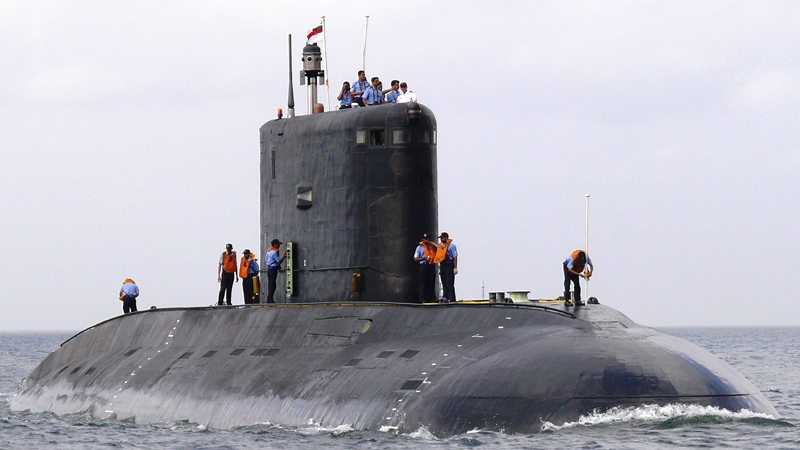
India has been one of the largest arms-importing countries. Prime Minister Narendra Modi has long envisioned making India self-reliant in defence production. Under initiatives such as Atmanirbharta (self-reliance), the BJP government changed structural and procurement policies to accelerate defense indigenisation. One of the aims has been to make the Indian Navy fully self-sufficient by 2047. In this regard, Project-75 India (P-75I) is integral to manufacturing defence equipment indigenously. Simultaneously, India is still in the final stage of acquiring six advanced stealth submarines from Germany for around $8 billion. At one end, Narendra Modi wants to reduce defense imports; at the other, he is going to sign one of the largest defense deals. This does not represent a policy inconsistency but a bid to boost its maritime capabilities and bridge the technological gap.
Developing an indigenous defence industry offers significant economic, strategic, and technological advantages, allowing a nation to reduce reliance on foreign suppliers. Economically, a developed defence industry not only provides jobs but also has the potential to make money through arms exports. Strategically, in times of conflict and international sanctions, a homegrown defence industry ensures the maintenance, upgrade, and availability of critical military equipment. Simultaneously, it creates an ecosystem in which increased Research and Development (R&D) and rapid prototyping for tactical superiority lead to technological growth.
In 2020, Narendra Modi launched the Atmanirbharta initiative to promote Indian goods, including defense, in the global supply chain. In a significant move towards indigenous defense production, the Indian government has banned the import of 101 defense items, including conventional diesel-electric submarines. Additionally, the Modi government initiated major structural and organizational changes within India’s defense framework. For example, the appointment of the Chief of Defense Staff (CDS) in 2019 and the establishment of the Department of Military Affairs marked a pivotal step in streamlining procurement for the three branches of the armed forces. To further accelerate indigenization efforts, Defence Industrial Corridors were established in Uttar Pradesh and Tamil Nadu. Defence spending rose by 210% from USD 30.3Bn (2014–15) to USD 94.6Bn (2026–27). These steps highlight Modi’s ambitions to make India self-sufficient in defense manufacturing.
In the last month, the Indian Defence Minister Rajnath Singh visited Germany to strengthen the strategic defence partnership. During the visit, Berlin agreed to provide six conventional submarines in one of New Delhi’s largest defence deals. Despite already having four domestically made nuclear-powered ballistic missile submarines (SSBN), the rationale for this deal is India’s interest in the Air-Independent Propulsion System (AIP). The AIP has a force-multiplier effect on the lethality of a diesel-electric submarine, as it enhances submerged endurance several-fold. German diesel-electric submarines (SSKs) use this technology, which extends their capability to remain submerged for longer durations, enhancing survivability.
The Project-75 India (P-75I) is a part of India’s efforts to acquire the capability to design and construct advanced SSK indigenously. Under this project, the Defence Research and Development Organisation (DRDO) has been working on indigenously building AIP. Since its inception in the 1990s, the programme has made no substantial progress due to several deferments and delays. Besides, DRDO chairman Samir Kamat said aggressive underbidding by industry players had hampered progress on key defence projects. The deal with German company ThyssenKrupp Marine Systems (TKMS) is an effort to sustain the Project-75 India. TKMS has been providing shipbuilding services for 185 years. It is widely considered the world leader in conventional (non-nuclear) submarine design, with its vessels currently in service with 27 navies, including over 70% of NATO conventional fleets.
Joint ventures represent Technology 3 level, in which critical systems are imported while the rest of the work is done indigenously. Under P-75I, India has built six Kalvari-class submarines in collaboration with France. In a major boost to Atmanirbharta, New Delhi has been retrofitting these submarines with indigenously built AIP technology. The current deal between Germany’s TKMS and India’s state-owned Mazagon Dock Shipbuilders Ltd. is another joint venture. Mazagon Ltd will design the outer structure while importing critical technologies such as AIP. It should be noted that domestic manufacturing faces difficulties. After all, steps such as thermal management and silent power output require precision and experience. This highlights a technological gap in the Indian Defence Industry.
Besides the technological gap, due to procurement delays and institutional sluggishness, India’s conventional submarine fleet is aging and lacking in numbers. In 1999, the Ministry of Defence (MoD) approved a plan to construct a total of 24 submarines over 30 years. However, due to financial constraints, only six submarines of Kalvari Class – INS Kalvari, INS Khanderi, INS Karanj, INS Vela, INS Vagir, and INS Vagsheer- would be authorised for operational status by the mid-2030s. Against this background, the deal with Germany will not only enhance the technology transfer but also the maritime capabilities of the Indian Navy. To sum up, despite introducing several structural, massive funding, and procurement changes under the policy of Atmanirbharta, the Modi government’s ambition to make the Indian Navy self-sufficient by 2047 remains a distant dream. Persistent institutional delays and technological gaps limit the realization of a self-sufficient navy. Even when the government banned the import of conventional submarines, circumstances pushed it to overlook the self-sufficient policy (Atmanirbharta). Therefore, it can be argued that the India-Germany deal for six advanced submarines aims to fulfil the technological gap and boost its maritime capabilities.
This article was published in another form at https://www.internationalaffairs.org.au/australianoutlook/the-limits-of-indigenisation-behind-india-germany-submarines-deal/

Muhammad Kumail Mehdi is a Research Assistant at the Center for International Strategic Studies in Islamabad.