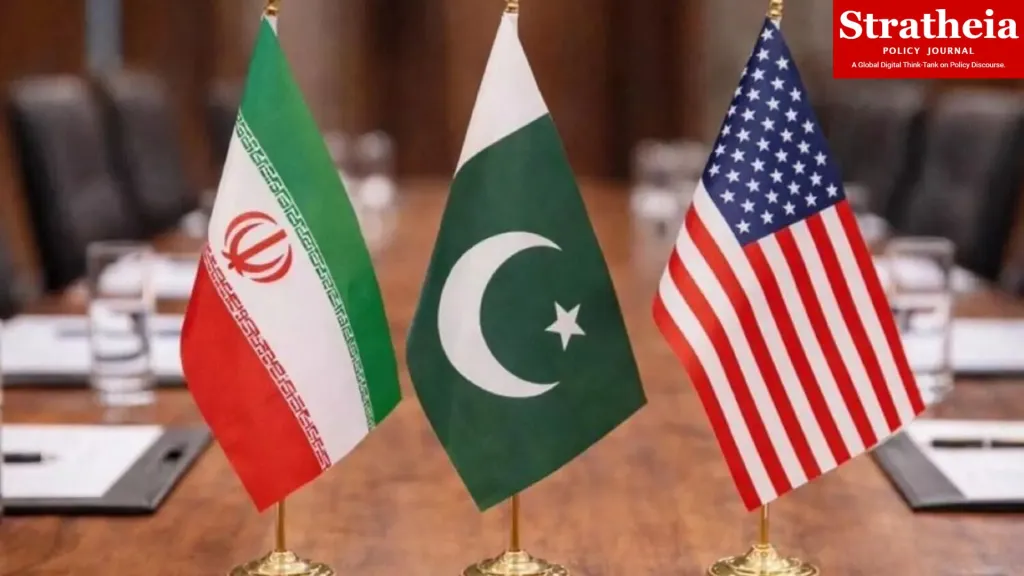
As delegations from the United States and Iran convened in Islamabad on April 11, 2026, for direct negotiations facilitated by Pakistan, the international community witnessed a development that few had anticipated. Pakistan, which brokered a ceasefire between the two warring parties on April 7, had emerged as the principal intermediary in one of the most consequential diplomatic efforts in history. That both Washington and Tehran accepted Pakistan in this role, at a moment of acute military conflict and deep mutual hostility, reflects a convergence of factors that deserve serious attention. Understanding how Pakistan curved out this position requires a study of the relationships it has cultivated, the diplomatic stance it has maintained, and the structural conditions that made it the only actor simultaneously trusted by both sides.
The Foundation of Pakistan’s Credibility
Pakistan’s ability to mediate between the United States and Iran rests fundamentally on the character of its bilateral relationships with both sides. These relationships reflect decades of sustained engagement that have established a degree of mutual confidence not easily replicated by other potential intermediaries.
Pakistan’s relationship with the United States has undergone a significant transformation in recent years. High-level diplomatic and military engagement, including direct contacts between Pakistan’s senior leadership and the Trump administration, established a channel of communication that proved essential when Washington required a credible intermediary to engage Tehran. Pakistan’s conduct during its bilateral conflict with India in May 2025, specifically its demonstrated preference for de-escalation and its public acknowledgment of American diplomatic efforts in bringing that crisis to a close, consolidated its standing in Washington considerably. The personal rapport developed between Pakistan’s leadership and President Trump during this period created a foundation of trust that became directly relevant to the mediation effort months later.
Pakistan’s relationship with Iran operates on an entirely different but equally substantive basis. The two countries share a long border and a history of bilateral engagement that predates the contemporary state system in its cultural and civilizational dimensions. Iran was among the first countries to recognize Pakistan’s independence, and that foundational gesture has shaped the quality of the bilateral relationship ever since. Pakistan and Iran have maintained constructive diplomatic ties across periods of considerable regional turbulence, and Islamabad has consistently approached Tehran as a neighboring state deserving of respect and engagement.
Beyond its historical foundations, Pakistan’s engagement with Iran also rests on a concrete institutional dimension. As the country that represents Iran’s diplomatic interests in Washington, Pakistan possessed a practical channel that no other potential mediator had access to. When the conflict erupted on February 28, 2026, Pakistan was able to activate this channel, engaging across multiple capitals within days and putting forward a concrete ceasefire framework that included an immediate halt to hostilities, a two-week negotiation window, and confidence-building measures.
Pakistan’s position in the current conflict has been firmly rooted in international law and the principles of state sovereignty, calling consistently for a negotiated resolution and the protection of civilian populations. This stance reflects a broader and longstanding feature of Pakistani foreign policy, that when Muslim states are drawn into conflict with one another or with external powers, Pakistan’s role is not to take sides but to work actively toward peace and stability. This principled position has been a consistent feature of Pakistan’s regional and international conduct. This consistency gave Islamabad the credibility with leadership in Tehran, which considered Pakistani position as that of a trusted neighbour with a genuine and demonstrated commitment to peaceful resolution.
The Regional Dimension
Pakistan’s position is equally significant within the broader regional diplomatic landscape, and the way in which it mobilized that position for the mediation effort. Pakistan’s longstanding partnership with Saudi Arabia, and its substantive engagement with Gulf Cooperation Council (GCC) states more broadly, gave it direct access to the perspectives of the Arab states most immediately affected by the conflict. Its ability to convene the foreign ministers of Saudi Arabia, Egypt, and Türkiye in Islamabad in late March 2026, for coordinated consultations aimed at building momentum toward de-escalation. This multilateral dimension of Pakistan’s diplomatic effort was essential in creating the political conditions within which a ceasefire could become viable.
Moreover, Pakistan’s partnership with China introduced a further importance to the mediation effort. Direct consultations between Pakistani and Chinese senior officials during the crisis ensured that Beijing’s longstanding relationship with Iran and its considerable interest in regional stability was coordinated. Pakistan’s capacity to serve simultaneously as a trusted partner of Washington and a credible interlocutor with Beijing, at a moment of intensifying competition, reflects a distinctive feature of its foreign policy positioning that carries real value in the present international environment.
What made this external outreach effective, however, was the structural coherence with which Pakistan conducted its diplomacy internally. The civilian leadership maintained the formal diplomatic channel while Pakistan’s military leadership sustained lines of communication with figures in Tehran whose institutional positioning required a different mode of engagement. This dual-track approach ensured that the mediation effort did not stall at any single point of contact and that both parties could engage without being seen to make premature concessions. It is this coherence, civilian and military working in concert toward a single diplomatic objective, thus, achieving significant results.
The Significance for Pakistan’s International Standing
Pakistan’s facilitation of the United States-Iran ceasefire and its hosting of the Islamabad negotiations carry implications that extend beyond the immediate context of the current conflict. They demonstrate that Pakistan’s geographic position, at the intersection of South Asia, the Middle East, and Central Asia, combined with the breadth and depth of its bilateral relationships, constitutes a diplomatic asset of significant value. They establish Pakistan as a state capable of exercising constructive influence in matters of regional and global consequence at the highest level of international diplomacy.
Sustaining this role will require consistency of conduct and continued investment in professional diplomatic capacity. The credibility that Pakistan has established through this mediation effort is the product of years of sustained engagement. It will be preserved and extended through the same means, and it will be tested by the manner in which Pakistan manages the considerable complexities that the Islamabad negotiations will inevitably present in future. The Islamabad talks, while yet to produce immediate results, reflect precisely the kind of patience and persistence needed in diplomacy. Pakistan remains hopeful that the dialogue will continue and ultimately arrive at a conclusive resolution. What is clear at this stage is that Pakistan has demonstrated, under demanding conditions, the relationships, the diplomatic acumen, and the coherence necessary to serve as a consequential actor in international affairs. The international community’s recognition of that fact, reflected in the presence of American and Iranian delegations in Islamabad this week, is itself a significant marker of how Pakistan’s role in the global order is evolving.
This article was published in other form at:
https://newspaper.irandaily.ir/8991
https://irannewspaper.ir/8999/4

Syed Ali Abbas is Research Officer & Comm Officer at the Center for International Strategic Studies (CISS) Islamabad. He is also an MPhil scholar in the Department of Strategic Studies at the National Defense University (NDU) Islamabad.